Business expenditure deduction requires proof of genuine commission payments and commercial allowability; turnover growth alone cannot validate the cl...
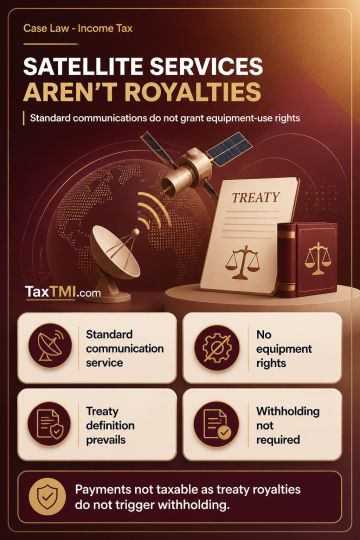
Article 8 treaty coverage excluded third-party airline support services, while documented demonetisation cash receipts remained accepted business inco...
Functional comparability under TNMM requires highway contract benchmarks to reflect operation, maintenance and transfer activities, requiring fresh be...
The assessee, a foreign-based company, initially failed to comply with the notice u/s 92D(3) within the statutory period of 60 days, responding on 25.03.2019 after a delay of 38 days. However, the Income Tax Appellate Tribunal (ITAT) considered the delay as minuscule and the reasons for non-compliance as bona fide and unintentional, given the peculiar circumstances of the assessee being a foreign entity and in the process of appointing a new authorized representative. The ITAT held that the penalty u/s 271G for non-compliance should be deleted, accepting the assessee's reasons for the inadvertent delay as reasonable. Consequently, the assessee's appeal against the penalty was allowed.
The assessee, a foreign-based company, initially failed to comply with the notice u/s 92D(3) within the statutory period of 60 days, responding on 25.03.2019 after a delay of 38 days. However, the Income Tax Appellate Tribunal (ITAT) considered the delay as minuscule and the reasons for non-compliance as bona fide and unintentional, given the peculiar circumstances of the assessee being a foreign entity and in the process of appointing a new authorized representative. The ITAT held that the penalty u/s 271G for non-compliance should be deleted, accepting the assessee's reasons for the inadvertent delay as reasonable. Consequently, the assessee's appeal against the penalty was allowed.
Note: It is a system-generated summary and is for quick reference only.
 TaxTMI
 of 4803


















 Join Channel


 TaxTMI