Transfer pricing requires evidence for AMP transactions, functionally reliable comparables, and appropriate aggregation or Berry Ratio benchmarking me...
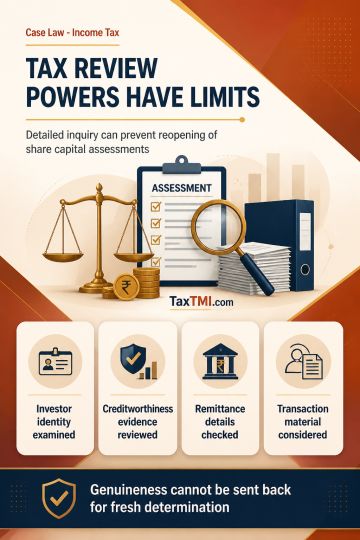
Revisionary jurisdiction cannot reopen share capital assessments where adequate inquiry supports a permissible view and no independent error is establ...
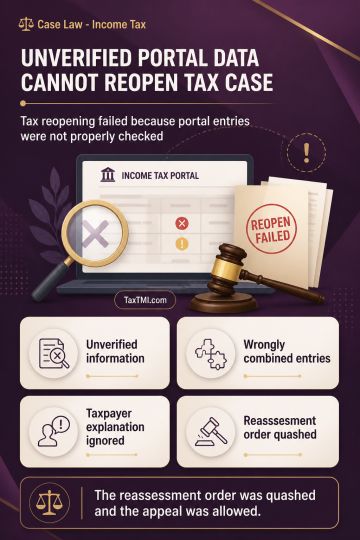
Reassessment jurisdiction fails where unverified portal information is aggregated without examining the taxpayer's explanation or relevance of entries...
Statutory sanction for delayed reassessment requires approval from the prescribed authority; approval by an inferior authority invalidates jurisdictio...
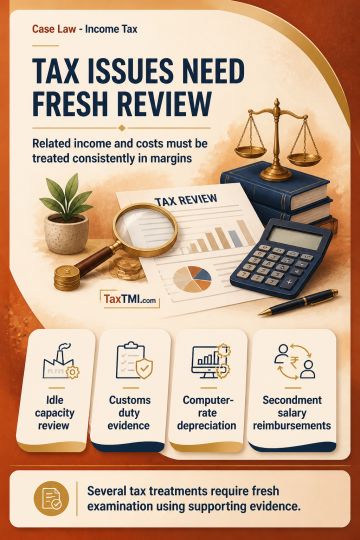
Transfer pricing margin adjustments require matching treatment of non-operating income and related costs, with comparability issues reconsidered on ev...
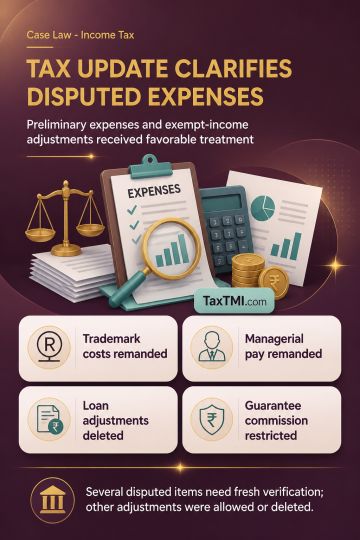
Preliminary-expense amortisation and MAT exempt-income adjustments prevailed, while trademark costs and managerial remuneration require fresh verifica...
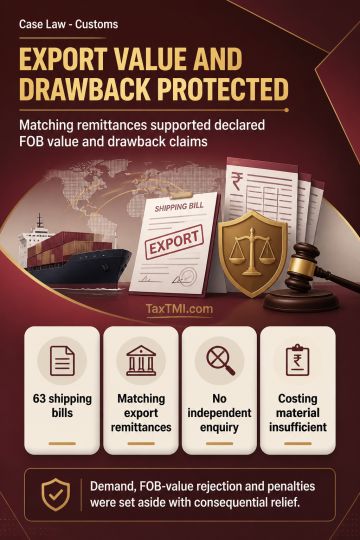
Export valuation requires contemporaneous evidence; unrelated invoices cannot prove overvaluation, and dual penalties on firm and partner are impermis...
The appellant was charged with evasion of central excise duty on the quantity of SKO cleared from the refinery intended for public distribution system. The CESTAT held that there was no willful suppression or misdeclaration of facts to defraud the exchequer. Following the Supreme Court's judgment in Nizam Sugar Factory, the CESTAT ruled that the subsequent show cause notices did not involve suppression of facts already known to the authorities. Since the goods were intended for public distribution system without any end-use condition, and intermixing was inevitable, the CESTAT relied on the Dalmia Dadri Cement Ltd. case to allow full exemption from duty after clearance. Consequently, the appeal against recovery of central excise duty was allowed.
The appellant was charged with evasion of central excise duty on the quantity of SKO cleared from the refinery intended for public distribution system. The CESTAT held that there was no willful suppression or misdeclaration of facts to defraud the exchequer. Following the Supreme Court's judgment in Nizam Sugar Factory, the CESTAT ruled that the subsequent show cause notices did not involve suppression of facts already known to the authorities. Since the goods were intended for public distribution system without any end-use condition, and intermixing was inevitable, the CESTAT relied on the Dalmia Dadri Cement Ltd. case to allow full exemption from duty after clearance. Consequently, the appeal against recovery of central excise duty was allowed.
Note: It is a system-generated summary and is for quick reference only.
 TaxTMI
 of 4801











 Join Channel


 TaxTMI
