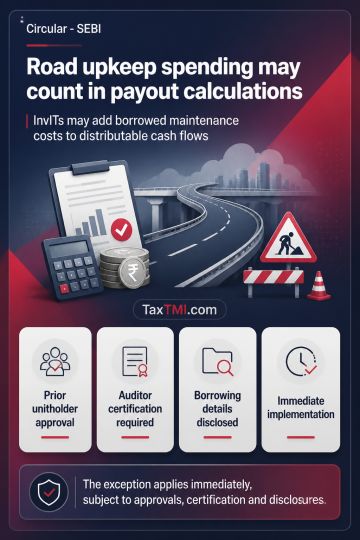
Online bond platforms may offer overseas-regulated products and tax-specific bonds subject to disclosures, compliance safeguards and revised complianc...
Corporate guarantee valuation permits actual ascertainable commission while barring retroactive application and extended-period penalties for bona fid...
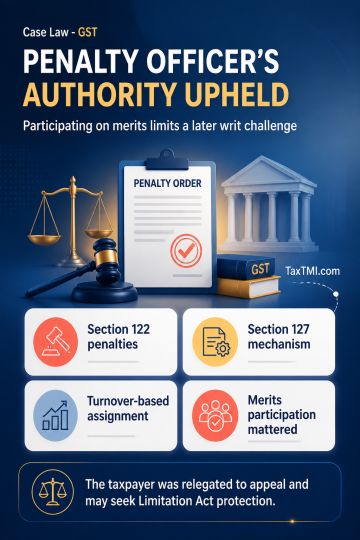
Proper-officer jurisdiction under UPGST penalty provisions upheld; participation on merits prevents bypassing the statutory appellate remedy through w...
Transitioned CENVAT credit may validly satisfy mandatory pre-deposit requirements for legacy service tax appeals through Electronic Credit Ledger debi...
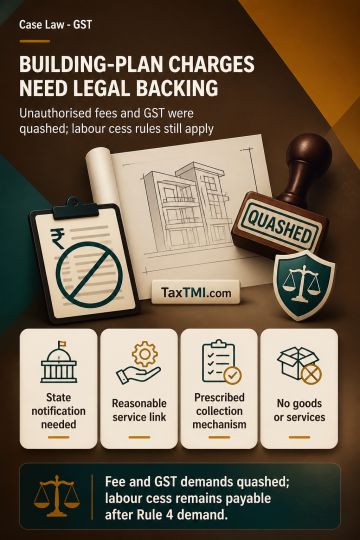
Building-plan sanction charges require statutory authority; unauthorised fees and GST were quashed, while labour cess must follow prescribed collectio...
Pure-agent exclusion fails where hotel booking facilitators receive third-party services themselves, making entire customer consideration taxable as r...
The appellant was charged with evasion of central excise duty on the quantity of SKO cleared from the refinery intended for public distribution system. The CESTAT held that there was no willful suppression or misdeclaration of facts to defraud the exchequer. Following the Supreme Court's judgment in Nizam Sugar Factory, the CESTAT ruled that the subsequent show cause notices did not involve suppression of facts already known to the authorities. Since the goods were intended for public distribution system without any end-use condition, and intermixing was inevitable, the CESTAT relied on the Dalmia Dadri Cement Ltd. case to allow full exemption from duty after clearance. Consequently, the appeal against recovery of central excise duty was allowed.
The appellant was charged with evasion of central excise duty on the quantity of SKO cleared from the refinery intended for public distribution system. The CESTAT held that there was no willful suppression or misdeclaration of facts to defraud the exchequer. Following the Supreme Court's judgment in Nizam Sugar Factory, the CESTAT ruled that the subsequent show cause notices did not involve suppression of facts already known to the authorities. Since the goods were intended for public distribution system without any end-use condition, and intermixing was inevitable, the CESTAT relied on the Dalmia Dadri Cement Ltd. case to allow full exemption from duty after clearance. Consequently, the appeal against recovery of central excise duty was allowed.
Note: It is a system-generated summary and is for quick reference only.
 TaxTMI
 of 4800












 Join Channel


 TaxTMI