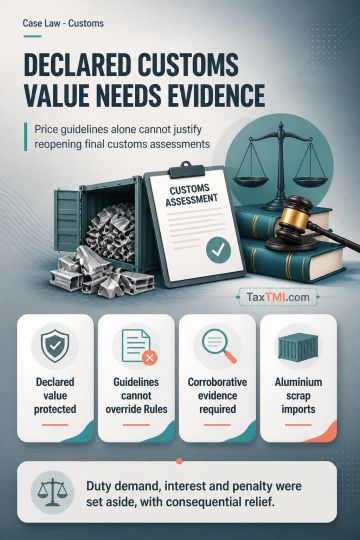
Transaction value cannot be rejected solely on non-statutory valuation guidelines without corroborative evidence supporting reassessment of final cust...
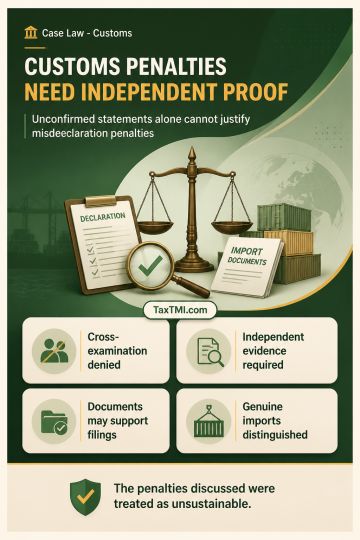
Cross-examination rights and corroborated evidence limit customs penalties for misdeclaration in genuine import transactions involving documented clea...
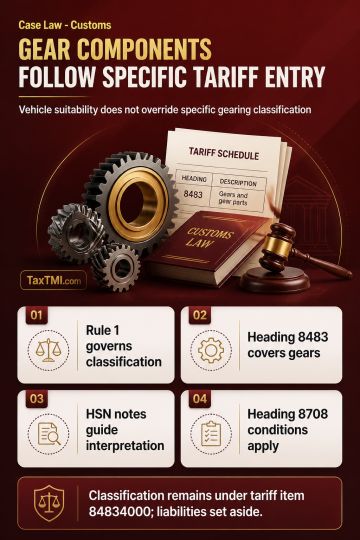
Tariff classification of vehicle gear components follows the specific gearing entry, displacing motor-vehicle parts classification and related liabili...
Necessary-party requirements limit impleadment of independent entities, while deferred consideration does not create an appealable adverse determinati...
Food supplement classification requires common parlance and authoritative tests, preventing treatment as proprietary Ayurvedic medicines without suppo...
The appellant was charged with evasion of central excise duty on the quantity of SKO cleared from the refinery intended for public distribution system. The CESTAT held that there was no willful suppression or misdeclaration of facts to defraud the exchequer. Following the Supreme Court's judgment in Nizam Sugar Factory, the CESTAT ruled that the subsequent show cause notices did not involve suppression of facts already known to the authorities. Since the goods were intended for public distribution system without any end-use condition, and intermixing was inevitable, the CESTAT relied on the Dalmia Dadri Cement Ltd. case to allow full exemption from duty after clearance. Consequently, the appeal against recovery of central excise duty was allowed.
The appellant was charged with evasion of central excise duty on the quantity of SKO cleared from the refinery intended for public distribution system. The CESTAT held that there was no willful suppression or misdeclaration of facts to defraud the exchequer. Following the Supreme Court's judgment in Nizam Sugar Factory, the CESTAT ruled that the subsequent show cause notices did not involve suppression of facts already known to the authorities. Since the goods were intended for public distribution system without any end-use condition, and intermixing was inevitable, the CESTAT relied on the Dalmia Dadri Cement Ltd. case to allow full exemption from duty after clearance. Consequently, the appeal against recovery of central excise duty was allowed.
Note: It is a system-generated summary and is for quick reference only.
 TaxTMI
 of 4805















 Join Channel


 TaxTMI
