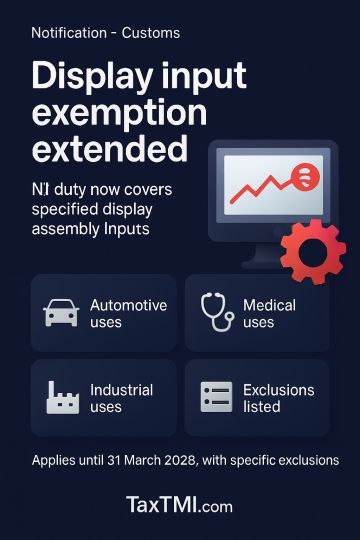
BCD exemption for specified display assembly inputs extended for automotive, medical and industrial applications, with defined exclusions and sunset d...
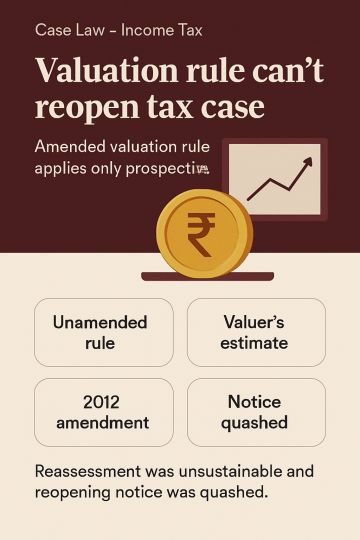
Prospective valuation amendment limits reassessment: unamended fair market value reference could not justify reopening based on a registered valuer's ...
Page of 4807
Press 'Enter' after typing page number.
1441 to 1460 of 96136 Results
❮
❯
❯❯
0 / 200
Expand Note
Add to Folder
No Folders have been created
+
Are you sure you want to delete "My most important" ?
The Appellate Tribunal allowed the assessee's appeal against the invocation of Section 263 by the Principal Commissioner of Income Tax (PCIT) for disallowing the entire purchases of Rs. 102,43,73,377/-. The Tribunal held that the Assessing Officer (AO) had reasonably disallowed only 10% of the purchases after duly considering the details furnished by the assessee during the assessment proceedings u/s 143(3). The PCIT's action of proposing to disallow the entire purchases against the basic principle of business, without appreciating that the assessee had achieved a turnover of Rs. 132,12,33,622/-, was erroneous. The Tribunal ruled that the AO's order cannot be termed erroneous to invoke Section 263, as it is not every error that should induce the PCIT to exercise powers under that section, especially when the AO has considered the issue carefully and cautiously.
The Appellate Tribunal allowed the assessee's appeal against the invocation of Section 263 by the Principal Commissioner of Income Tax (PCIT) for disallowing the entire purchases of Rs. 102,43,73,377/-. The Tribunal held that the Assessing Officer (AO) had reasonably disallowed only 10% of the purchases after duly considering the details furnished by the assessee during the assessment proceedings u/s 143(3). The PCIT's action of proposing to disallow the entire purchases against the basic principle of business, without appreciating that the assessee had achieved a turnover of Rs. 132,12,33,622/-, was erroneous. The Tribunal ruled that the AO's order cannot be termed erroneous to invoke Section 263, as it is not every error that should induce the PCIT to exercise powers under that section, especially when the AO has considered the issue carefully and cautiously.
Note: It is a system-generated summary and is for quick reference only.
 TaxTMI
 of 4807








 Join Channel


 TaxTMI