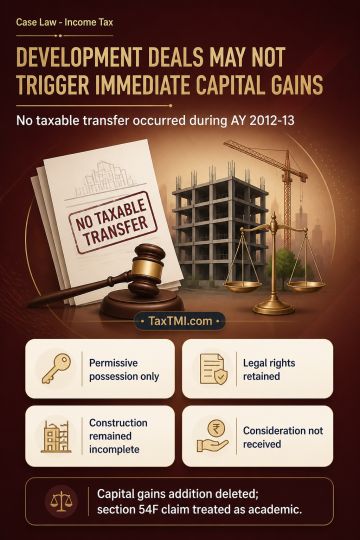
Development agreements require legal possession or effective enjoyment for capital gains transfer; permissive possession and deferred consideration de...
Prolonged sterilisation of development rights supports capital-gains treatment, while business-income disallowances cannot govern capital-gains comput...
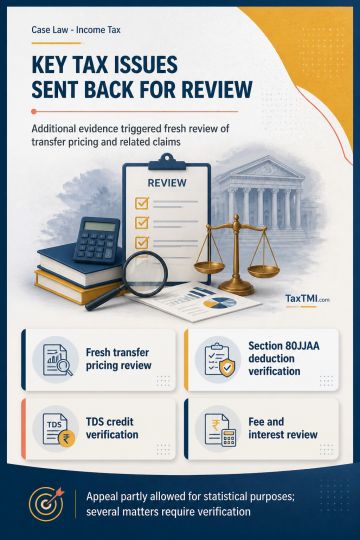
Additional evidence in transfer pricing dispute leads to fresh examination, while tax deductions, TDS credit, fee and refund interest require verifica...
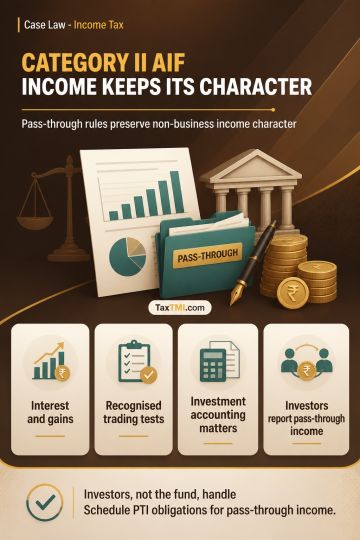
Category II AIF pass-through taxation preserves non-business income character; investment receipts cannot be reclassified without applying recognised ...
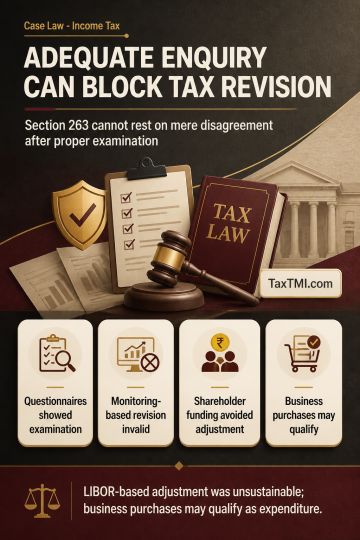
The Appellate Tribunal allowed the assessee's appeal against the invocation of Section 263 by the Principal Commissioner of Income Tax (PCIT) for disallowing the entire purchases of Rs. 102,43,73,377/-. The Tribunal held that the Assessing Officer (AO) had reasonably disallowed only 10% of the purchases after duly considering the details furnished by the assessee during the assessment proceedings u/s 143(3). The PCIT's action of proposing to disallow the entire purchases against the basic principle of business, without appreciating that the assessee had achieved a turnover of Rs. 132,12,33,622/-, was erroneous. The Tribunal ruled that the AO's order cannot be termed erroneous to invoke Section 263, as it is not every error that should induce the PCIT to exercise powers under that section, especially when the AO has considered the issue carefully and cautiously.
The Appellate Tribunal allowed the assessee's appeal against the invocation of Section 263 by the Principal Commissioner of Income Tax (PCIT) for disallowing the entire purchases of Rs. 102,43,73,377/-. The Tribunal held that the Assessing Officer (AO) had reasonably disallowed only 10% of the purchases after duly considering the details furnished by the assessee during the assessment proceedings u/s 143(3). The PCIT's action of proposing to disallow the entire purchases against the basic principle of business, without appreciating that the assessee had achieved a turnover of Rs. 132,12,33,622/-, was erroneous. The Tribunal ruled that the AO's order cannot be termed erroneous to invoke Section 263, as it is not every error that should induce the PCIT to exercise powers under that section, especially when the AO has considered the issue carefully and cautiously.
Note: It is a system-generated summary and is for quick reference only.
 TaxTMI
 of 4805







 Join Channel


 TaxTMI
