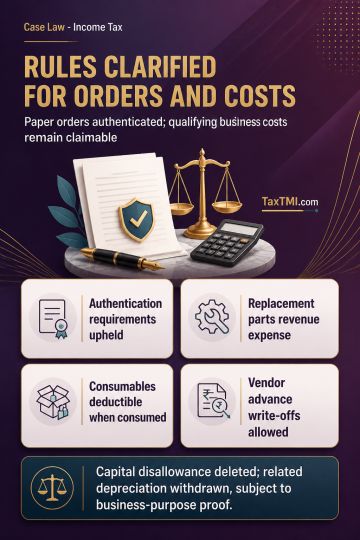
Authentication of paper assessment orders upheld, while qualifying repairs, consumables and vendor advance write-offs remain deductible business claim...
Transaction value cannot be rejected solely on non-statutory valuation guidelines without corroborative evidence supporting reassessment of final cust...
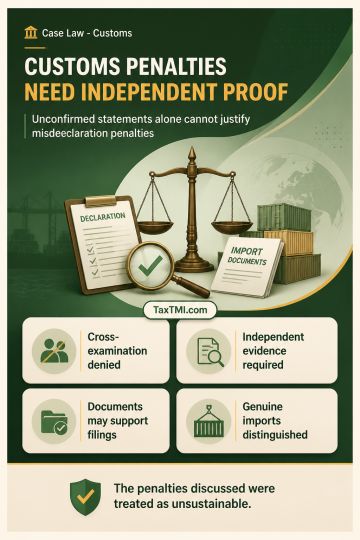
Cross-examination rights and corroborated evidence limit customs penalties for misdeclaration in genuine import transactions involving documented clea...
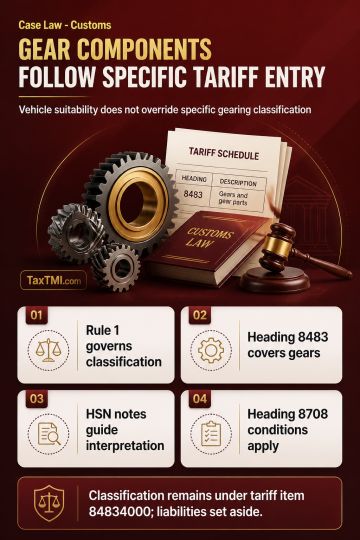
Tariff classification of vehicle gear components follows the specific gearing entry, displacing motor-vehicle parts classification and related liabili...
The Appellate Tribunal allowed the assessee's appeal against the invocation of Section 263 by the Principal Commissioner of Income Tax (PCIT) for disallowing the entire purchases of Rs. 102,43,73,377/-. The Tribunal held that the Assessing Officer (AO) had reasonably disallowed only 10% of the purchases after duly considering the details furnished by the assessee during the assessment proceedings u/s 143(3). The PCIT's action of proposing to disallow the entire purchases against the basic principle of business, without appreciating that the assessee had achieved a turnover of Rs. 132,12,33,622/-, was erroneous. The Tribunal ruled that the AO's order cannot be termed erroneous to invoke Section 263, as it is not every error that should induce the PCIT to exercise powers under that section, especially when the AO has considered the issue carefully and cautiously.
The Appellate Tribunal allowed the assessee's appeal against the invocation of Section 263 by the Principal Commissioner of Income Tax (PCIT) for disallowing the entire purchases of Rs. 102,43,73,377/-. The Tribunal held that the Assessing Officer (AO) had reasonably disallowed only 10% of the purchases after duly considering the details furnished by the assessee during the assessment proceedings u/s 143(3). The PCIT's action of proposing to disallow the entire purchases against the basic principle of business, without appreciating that the assessee had achieved a turnover of Rs. 132,12,33,622/-, was erroneous. The Tribunal ruled that the AO's order cannot be termed erroneous to invoke Section 263, as it is not every error that should induce the PCIT to exercise powers under that section, especially when the AO has considered the issue carefully and cautiously.
Note: It is a system-generated summary and is for quick reference only.
 TaxTMI
 of 4805







 Join Channel


 TaxTMI