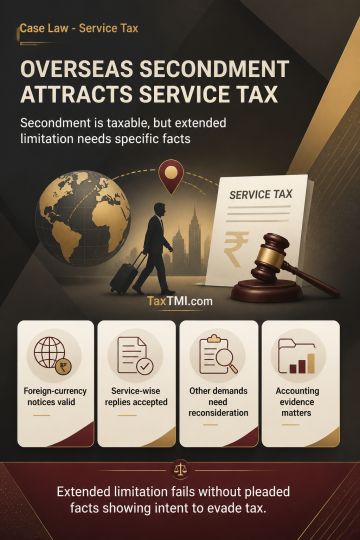
Extended limitation fails without specific suppression allegations, while overseas employee secondment remains taxable as manpower supply within norma...
Time-share accommodation classification excludes Club or Association Service where purchasers receive contractual occupancy rights without genuine mem...
CENVAT credit for trading requires reversal, while taxable-service rental credit remains proportionately available and limitation issues await resolut...
Vicarious liability for dishonoured company cheques may extend to non-signatory directors where complaints contain foundational responsibility avermen...
The Appellate Tribunal allowed the assessee's appeal against the invocation of Section 263 by the Principal Commissioner of Income Tax (PCIT) for disallowing the entire purchases of Rs. 102,43,73,377/-. The Tribunal held that the Assessing Officer (AO) had reasonably disallowed only 10% of the purchases after duly considering the details furnished by the assessee during the assessment proceedings u/s 143(3). The PCIT's action of proposing to disallow the entire purchases against the basic principle of business, without appreciating that the assessee had achieved a turnover of Rs. 132,12,33,622/-, was erroneous. The Tribunal ruled that the AO's order cannot be termed erroneous to invoke Section 263, as it is not every error that should induce the PCIT to exercise powers under that section, especially when the AO has considered the issue carefully and cautiously.
The Appellate Tribunal allowed the assessee's appeal against the invocation of Section 263 by the Principal Commissioner of Income Tax (PCIT) for disallowing the entire purchases of Rs. 102,43,73,377/-. The Tribunal held that the Assessing Officer (AO) had reasonably disallowed only 10% of the purchases after duly considering the details furnished by the assessee during the assessment proceedings u/s 143(3). The PCIT's action of proposing to disallow the entire purchases against the basic principle of business, without appreciating that the assessee had achieved a turnover of Rs. 132,12,33,622/-, was erroneous. The Tribunal ruled that the AO's order cannot be termed erroneous to invoke Section 263, as it is not every error that should induce the PCIT to exercise powers under that section, especially when the AO has considered the issue carefully and cautiously.
Note: It is a system-generated summary and is for quick reference only.
 TaxTMI
 of 4801









 Join Channel


 TaxTMI