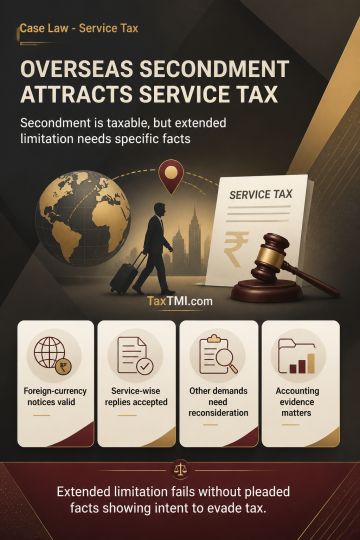
Extended limitation fails without specific suppression allegations, while overseas employee secondment remains taxable as manpower supply within norma...
Time-share accommodation classification excludes Club or Association Service where purchasers receive contractual occupancy rights without genuine mem...
CENVAT credit for trading requires reversal, while taxable-service rental credit remains proportionately available and limitation issues await resolut...
Vicarious liability for dishonoured company cheques may extend to non-signatory directors where complaints contain foundational responsibility avermen...
The Supreme Court held that the appellant was neither the importer nor the owner of the imported car in question under the Customs Act, 1962 and the Motor Vehicles Act, 1988 respectively. The original importer remained the legal owner as the vehicle was not registered in the appellant's name. Consequently, the initiation of proceedings against the appellant by issuing a show cause notice, seizing, and confiscating the vehicle was unlawful. The Supreme Court quashed the impugned judgments, show cause notices, and other proceedings against the appellant, and restored the order of the Appellate Tribunal.
The Supreme Court held that the appellant was neither the importer nor the owner of the imported car in question under the Customs Act, 1962 and the Motor Vehicles Act, 1988 respectively. The original importer remained the legal owner as the vehicle was not registered in the appellant's name. Consequently, the initiation of proceedings against the appellant by issuing a show cause notice, seizing, and confiscating the vehicle was unlawful. The Supreme Court quashed the impugned judgments, show cause notices, and other proceedings against the appellant, and restored the order of the Appellate Tribunal.
Note: It is a system-generated summary and is for quick reference only.
 TaxTMI
 of 4798





 Join Channel


 TaxTMI
