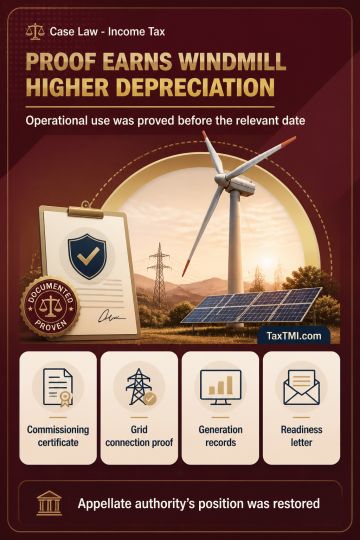
Windmill commissioning evidence supported higher depreciation where grid connection and electricity generation proved operational use before the relev...
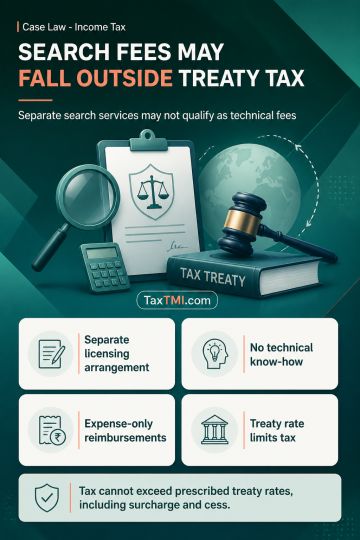
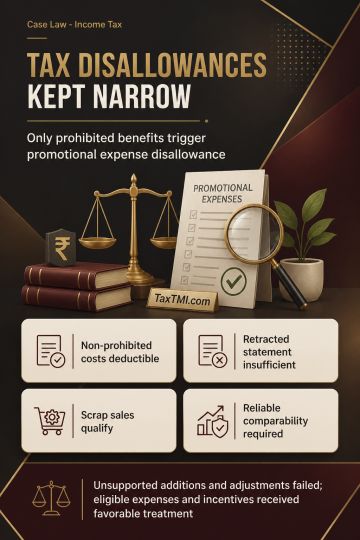
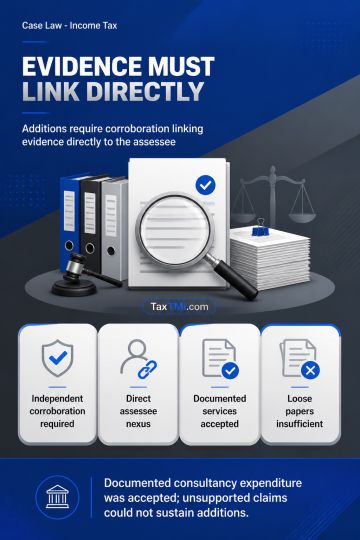
Pharmaceutical promotion and transfer-pricing comparability principles limited disallowances, while uncorroborated search allegations and unsupported ...
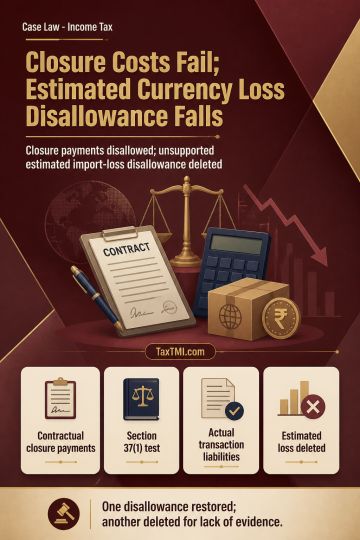
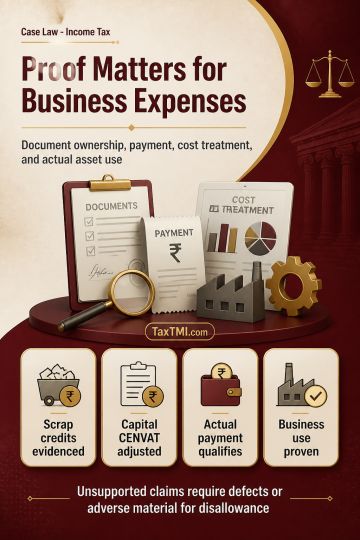
Business expenditure substantiation supports scrap credits, statutory payments and expense claims, while depreciation requires proof of actual busines...
The respondent's request for conversion of shipping bills from NFEI to EOU/other schemes was made after a period of three months, exceeding the time limit. However, it was held that Section 149 of the Customs Act, 1962 does not specify any time limit for such conversions. The Tribunal and High Court have allowed conversions even when the request was filed beyond three months, as the time limit prescribed by the Board Circular is not binding, being a non-statutory provision. Since the conversion had no revenue implication and the respondent did not claim any export incentive schemes, the impugned order was upheld, and the Revenue's appeal was dismissed.
The respondent's request for conversion of shipping bills from NFEI to EOU/other schemes was made after a period of three months, exceeding the time limit. However, it was held that Section 149 of the Customs Act, 1962 does not specify any time limit for such conversions. The Tribunal and High Court have allowed conversions even when the request was filed beyond three months, as the time limit prescribed by the Board Circular is not binding, being a non-statutory provision. Since the conversion had no revenue implication and the respondent did not claim any export incentive schemes, the impugned order was upheld, and the Revenue's appeal was dismissed.
Note: It is a system-generated summary and is for quick reference only.
 TaxTMI
 of 4803








 Join Channel


 TaxTMI
