Provisional attachment of laundered funds and equivalent-value property sustained, with statutory protection limited to pension, gratuity and providen...
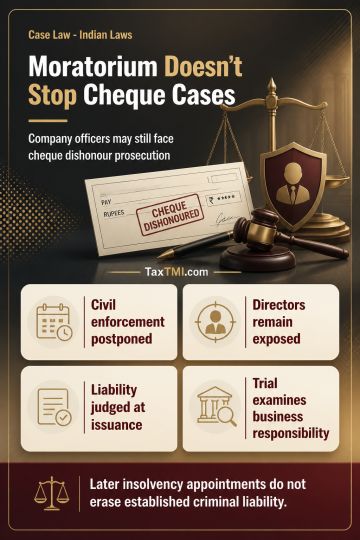
Insolvency moratorium does not shield company officers from cheque dishonour prosecution for liability arising before corporate insolvency proceedings...
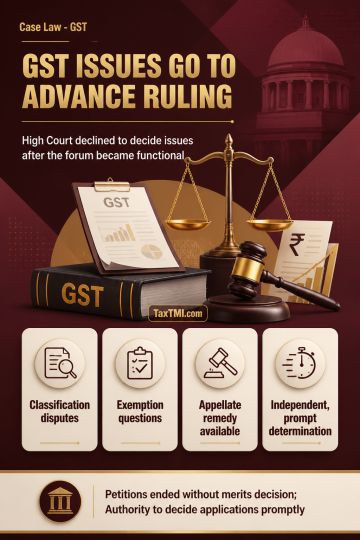
Advance-ruling mechanism governs pending GST classification, exemption and taxability disputes, limiting writ review once the specialised forum functi...
The NCLAT dismissed the appeal challenging the approval of the resolution plan by the Committee of Creditors (CoC) and the Adjudicating Authority. The key findings were: The adoption of the Swiss Challenge Method by the CoC for value maximization was an outcome of its commercial wisdom, which cannot be interfered with. The appellant's contention questioning the Swiss Challenge method lacked merit. The Resolution Professional (RP) conducted the Corporate Insolvency Resolution Process (CIRP) fairly and transparently, providing equal opportunity to all resolution applicants. The CoC duly considered and evaluated the revised resolution plan of the successful resolution applicant (SRA) before approval. The appellant's claim of denial of effective participation in CoC meetings was unfounded. The Adjudicating Authority did not err in approving the SRA's resolution plan, as no grounds u/s 61(3) of the Insolvency and Bankruptcy Code (IBC) were established to interfere with the CoC's commercial decision. The NCLAT upheld the primacy of the CoC's commercial wisdom and found no irregularities in the CIRP conduct by the RP.
The NCLAT dismissed the appeal challenging the approval of the resolution plan by the Committee of Creditors (CoC) and the Adjudicating Authority. The key findings were: The adoption of the Swiss Challenge Method by the CoC for value maximization was an outcome of its commercial wisdom, which cannot be interfered with. The appellant's contention questioning the Swiss Challenge method lacked merit. The Resolution Professional (RP) conducted the Corporate Insolvency Resolution Process (CIRP) fairly and transparently, providing equal opportunity to all resolution applicants. The CoC duly considered and evaluated the revised resolution plan of the successful resolution applicant (SRA) before approval. The appellant's claim of denial of effective participation in CoC meetings was unfounded. The Adjudicating Authority did not err in approving the SRA's resolution plan, as no grounds u/s 61(3) of the Insolvency and Bankruptcy Code (IBC) were established to interfere with the CoC's commercial decision. The NCLAT upheld the primacy of the CoC's commercial wisdom and found no irregularities in the CIRP conduct by the RP.
Note: It is a system-generated summary and is for quick reference only.
 TaxTMI
 of 4803















 Join Channel


 TaxTMI
