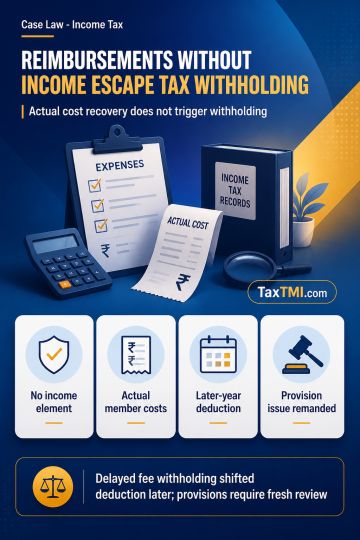
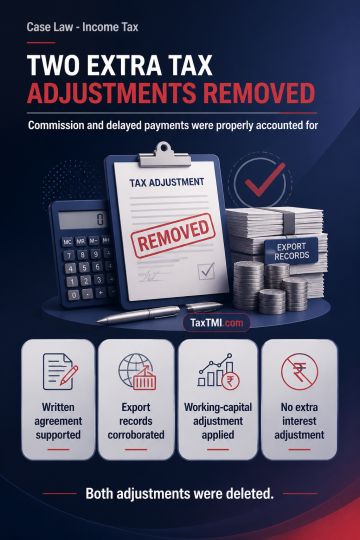
Pure reimbursement without income element escapes tax withholding, while delayed withholding and unsupported provisions face deferred or renewed scrut...
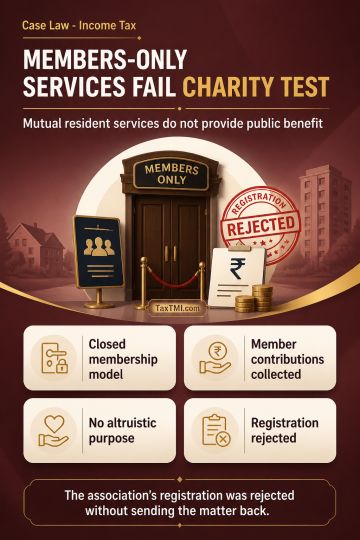
Public benefit requirement defeats charitable registration where residents' association services are reciprocal, member-only facilities governed by mu...
Exempt-income expenditure disallowance is confined to investments that actually generated exempt income, while supported business expenses remain dedu...
Objective characteristics and principal use govern mining-tyre classification, while fresh advance ruling applications may rely on additional technica...
The NCLAT dismissed the appeal challenging the approval of the resolution plan by the Committee of Creditors (CoC) and the Adjudicating Authority. The key findings were: The adoption of the Swiss Challenge Method by the CoC for value maximization was an outcome of its commercial wisdom, which cannot be interfered with. The appellant's contention questioning the Swiss Challenge method lacked merit. The Resolution Professional (RP) conducted the Corporate Insolvency Resolution Process (CIRP) fairly and transparently, providing equal opportunity to all resolution applicants. The CoC duly considered and evaluated the revised resolution plan of the successful resolution applicant (SRA) before approval. The appellant's claim of denial of effective participation in CoC meetings was unfounded. The Adjudicating Authority did not err in approving the SRA's resolution plan, as no grounds u/s 61(3) of the Insolvency and Bankruptcy Code (IBC) were established to interfere with the CoC's commercial decision. The NCLAT upheld the primacy of the CoC's commercial wisdom and found no irregularities in the CIRP conduct by the RP.
The NCLAT dismissed the appeal challenging the approval of the resolution plan by the Committee of Creditors (CoC) and the Adjudicating Authority. The key findings were: The adoption of the Swiss Challenge Method by the CoC for value maximization was an outcome of its commercial wisdom, which cannot be interfered with. The appellant's contention questioning the Swiss Challenge method lacked merit. The Resolution Professional (RP) conducted the Corporate Insolvency Resolution Process (CIRP) fairly and transparently, providing equal opportunity to all resolution applicants. The CoC duly considered and evaluated the revised resolution plan of the successful resolution applicant (SRA) before approval. The appellant's claim of denial of effective participation in CoC meetings was unfounded. The Adjudicating Authority did not err in approving the SRA's resolution plan, as no grounds u/s 61(3) of the Insolvency and Bankruptcy Code (IBC) were established to interfere with the CoC's commercial decision. The NCLAT upheld the primacy of the CoC's commercial wisdom and found no irregularities in the CIRP conduct by the RP.
Note: It is a system-generated summary and is for quick reference only.
 TaxTMI
 of 4803















 Join Channel


 TaxTMI
