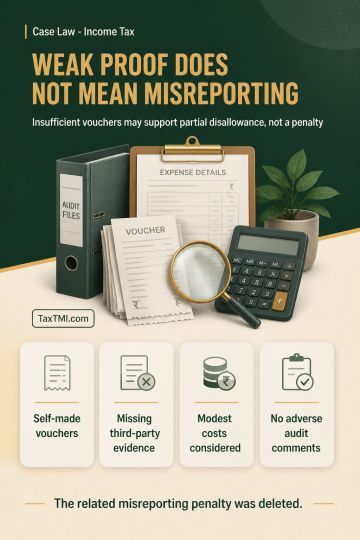
Authentication of paper assessment orders upheld, while qualifying repairs, consumables and vendor advance write-offs remain deductible business claim...
Transaction value cannot be rejected solely on non-statutory valuation guidelines without corroborative evidence supporting reassessment of final cust...
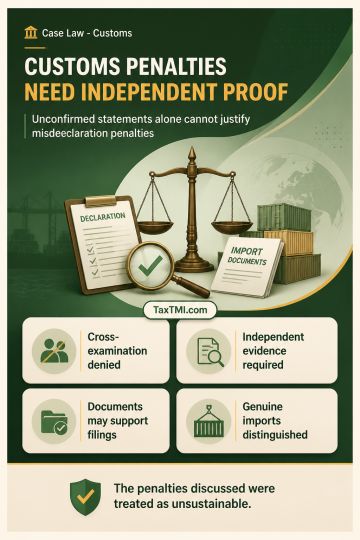
Cross-examination rights and corroborated evidence limit customs penalties for misdeclaration in genuine import transactions involving documented clea...
Tariff classification of vehicle gear components follows the specific gearing entry, displacing motor-vehicle parts classification and related liabili...
Necessary-party requirements limit impleadment of independent entities, while deferred consideration does not create an appealable adverse determinati...
The NCLAT dismissed the appeal challenging the approval of the resolution plan by the Committee of Creditors (CoC) and the Adjudicating Authority. The key findings were: The adoption of the Swiss Challenge Method by the CoC for value maximization was an outcome of its commercial wisdom, which cannot be interfered with. The appellant's contention questioning the Swiss Challenge method lacked merit. The Resolution Professional (RP) conducted the Corporate Insolvency Resolution Process (CIRP) fairly and transparently, providing equal opportunity to all resolution applicants. The CoC duly considered and evaluated the revised resolution plan of the successful resolution applicant (SRA) before approval. The appellant's claim of denial of effective participation in CoC meetings was unfounded. The Adjudicating Authority did not err in approving the SRA's resolution plan, as no grounds u/s 61(3) of the Insolvency and Bankruptcy Code (IBC) were established to interfere with the CoC's commercial decision. The NCLAT upheld the primacy of the CoC's commercial wisdom and found no irregularities in the CIRP conduct by the RP.
The NCLAT dismissed the appeal challenging the approval of the resolution plan by the Committee of Creditors (CoC) and the Adjudicating Authority. The key findings were: The adoption of the Swiss Challenge Method by the CoC for value maximization was an outcome of its commercial wisdom, which cannot be interfered with. The appellant's contention questioning the Swiss Challenge method lacked merit. The Resolution Professional (RP) conducted the Corporate Insolvency Resolution Process (CIRP) fairly and transparently, providing equal opportunity to all resolution applicants. The CoC duly considered and evaluated the revised resolution plan of the successful resolution applicant (SRA) before approval. The appellant's claim of denial of effective participation in CoC meetings was unfounded. The Adjudicating Authority did not err in approving the SRA's resolution plan, as no grounds u/s 61(3) of the Insolvency and Bankruptcy Code (IBC) were established to interfere with the CoC's commercial decision. The NCLAT upheld the primacy of the CoC's commercial wisdom and found no irregularities in the CIRP conduct by the RP.
Note: It is a system-generated summary and is for quick reference only.
 TaxTMI
 of 4803
















 Join Channel


 TaxTMI
