Pharmaceutical promotion and transfer-pricing comparability principles limited disallowances, while uncorroborated search allegations and unsupported ...
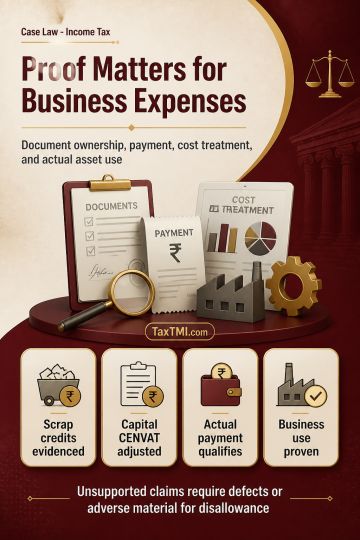
Business expenditure substantiation supports scrap credits, statutory payments and expense claims, while depreciation requires proof of actual busines...
The Appellate Tribunal allowed the appeal and set aside the impugned order. The Tribunal held that the Show Cause Notice did not discuss the unavailability of CENVAT credit to the appellants, nor did it propose to deny the availment of CENVAT credit. The Show Cause Notice focused on recovering duty paid on finished goods utilizing CENVAT credit, but it did not refer to Rule 14 of the CENVAT Credit Rules or allege that the credit was wrongly taken or inadmissible. Since duty was not payable on the final products cleared by the appellants, it was immaterial whether such duty was paid through cash or CENVAT credit. The Tribunal concluded that the impugned order exceeded the scope of the Show Cause Notice.
The Appellate Tribunal allowed the appeal and set aside the impugned order. The Tribunal held that the Show Cause Notice did not discuss the unavailability of CENVAT credit to the appellants, nor did it propose to deny the availment of CENVAT credit. The Show Cause Notice focused on recovering duty paid on finished goods utilizing CENVAT credit, but it did not refer to Rule 14 of the CENVAT Credit Rules or allege that the credit was wrongly taken or inadmissible. Since duty was not payable on the final products cleared by the appellants, it was immaterial whether such duty was paid through cash or CENVAT credit. The Tribunal concluded that the impugned order exceeded the scope of the Show Cause Notice.
Note: It is a system-generated summary and is for quick reference only.
 TaxTMI
 of 4803













 Join Channel


 TaxTMI