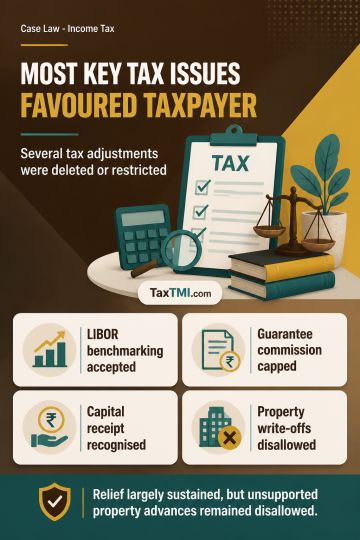
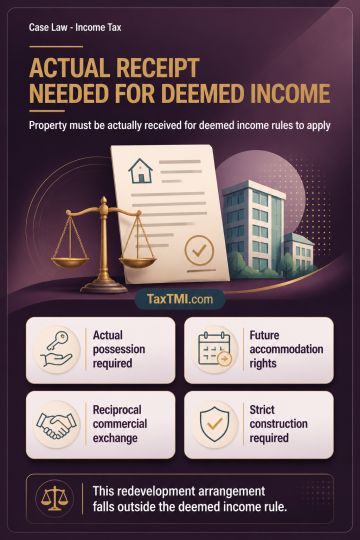
Receipt of immovable property requires actual possession or enjoyment; redevelopment allotments exchanged for tenancy rights fall outside deemed incom...
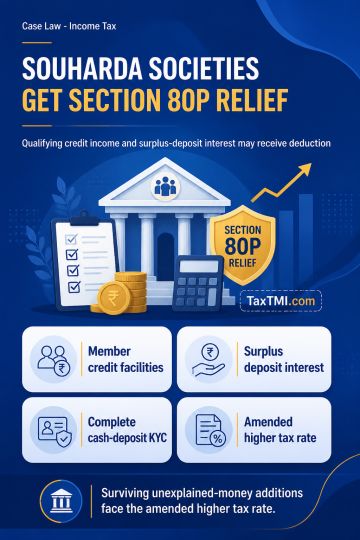
Section 80P deduction covers Souharda credit societies, including qualifying surplus-deposit interest, subject to member KYC verification for cash dep...
Transfer-pricing benchmarking and capital-receipt principles sustained taxpayer relief, while unsupported property-advance write-offs remained disallo...
Page of 4801
Press 'Enter' after typing page number.
941 to 960 of 96001 Results
❮
❯
❯❯
0 / 200
Expand Note
Add to Folder
No Folders have been created
+
Are you sure you want to delete "My most important" ?
The appellant Kaizen Organics Pvt. Ltd. was found guilty of fraudulently availing CENVAT credit and cash refund by showing fictitious manufacturing of excisable goods purportedly supplied to them by Koolmint. The Tribunal held that there was no credible evidence of actual manufacturing activity by Koolmint, and the claims of electricity consumption from DG sets lacked merit. The entire transaction appeared to be a sham to wrongfully avail duty benefits. Section 11D of the Central Excise Act was rightly invoked to recover Rs. 95,60,962 collected by Koolmint under the guise of excise duty. The extended period of limitation was correctly applied as the fraud vitiated all statutory records ab initio. The appeal was dismissed, upholding the Commissioner's order demanding duty, interest and penalties.
The appellant Kaizen Organics Pvt. Ltd. was found guilty of fraudulently availing CENVAT credit and cash refund by showing fictitious manufacturing of excisable goods purportedly supplied to them by Koolmint. The Tribunal held that there was no credible evidence of actual manufacturing activity by Koolmint, and the claims of electricity consumption from DG sets lacked merit. The entire transaction appeared to be a sham to wrongfully avail duty benefits. Section 11D of the Central Excise Act was rightly invoked to recover Rs. 95,60,962 collected by Koolmint under the guise of excise duty. The extended period of limitation was correctly applied as the fraud vitiated all statutory records ab initio. The appeal was dismissed, upholding the Commissioner's order demanding duty, interest and penalties.
Note: It is a system-generated summary and is for quick reference only.
 TaxTMI
 of 4801






 Join Channel


 TaxTMI