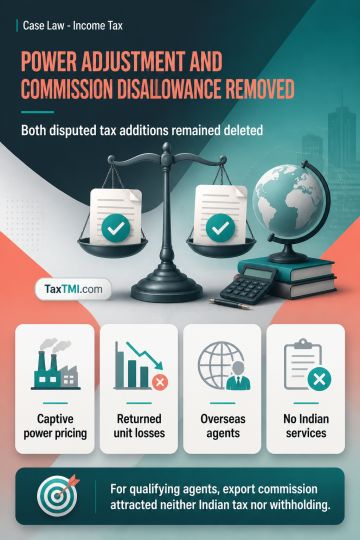
Captive power transfer pricing and non-resident export commission rules support deletion of adjustments and withholding disallowance in discussed proc...
Cooperative society deposits, member-interest TDS exemption and credit-facility deduction claims require verification through records and supporting e...
Customs jurisdiction over EPCG condition breaches survives export-obligation discharge certificates, requiring alleged fraud and misdeclaration to be ...
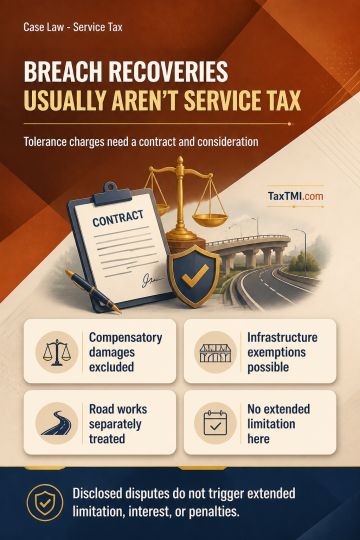
Contractual tolerance requires consideration; breach recoveries, qualifying public infrastructure services and road works escape service tax liability...
The appellant Kaizen Organics Pvt. Ltd. was found guilty of fraudulently availing CENVAT credit and cash refund by showing fictitious manufacturing of excisable goods purportedly supplied to them by Koolmint. The Tribunal held that there was no credible evidence of actual manufacturing activity by Koolmint, and the claims of electricity consumption from DG sets lacked merit. The entire transaction appeared to be a sham to wrongfully avail duty benefits. Section 11D of the Central Excise Act was rightly invoked to recover Rs. 95,60,962 collected by Koolmint under the guise of excise duty. The extended period of limitation was correctly applied as the fraud vitiated all statutory records ab initio. The appeal was dismissed, upholding the Commissioner's order demanding duty, interest and penalties.
The appellant Kaizen Organics Pvt. Ltd. was found guilty of fraudulently availing CENVAT credit and cash refund by showing fictitious manufacturing of excisable goods purportedly supplied to them by Koolmint. The Tribunal held that there was no credible evidence of actual manufacturing activity by Koolmint, and the claims of electricity consumption from DG sets lacked merit. The entire transaction appeared to be a sham to wrongfully avail duty benefits. Section 11D of the Central Excise Act was rightly invoked to recover Rs. 95,60,962 collected by Koolmint under the guise of excise duty. The extended period of limitation was correctly applied as the fraud vitiated all statutory records ab initio. The appeal was dismissed, upholding the Commissioner's order demanding duty, interest and penalties.
Note: It is a system-generated summary and is for quick reference only.
 TaxTMI
 of 4800










 Join Channel


 TaxTMI
