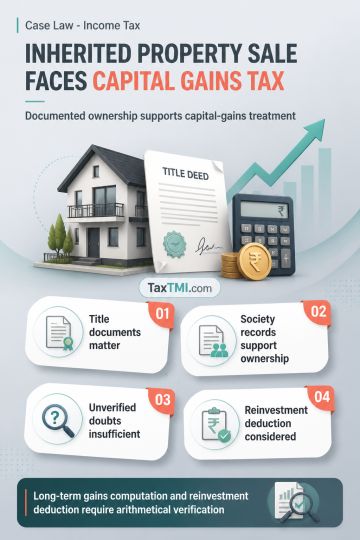
Inherited property sale proceeds require capital-gains treatment where ownership is supported by evidence, not suspicion or unverified signature doubt...
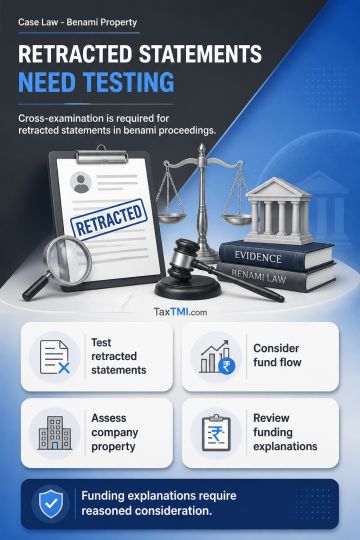
Cross-examination of retracted statements is essential where foundational evidence supports a benami allegation and documented funding explanations re...
Capital-goods exemption covers plant-modernisation accessories, while the import restriction applies only to earlier capital-goods components and spar...
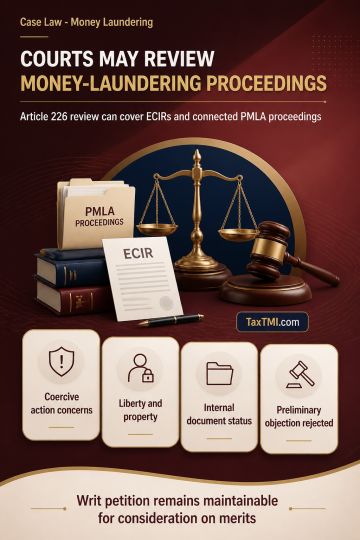
Constitutional judicial review permits challenges to ECIRs and connected money-laundering proceedings where coercive action affects fundamental intere...
The appellant Kaizen Organics Pvt. Ltd. was found guilty of fraudulently availing CENVAT credit and cash refund by showing fictitious manufacturing of excisable goods purportedly supplied to them by Koolmint. The Tribunal held that there was no credible evidence of actual manufacturing activity by Koolmint, and the claims of electricity consumption from DG sets lacked merit. The entire transaction appeared to be a sham to wrongfully avail duty benefits. Section 11D of the Central Excise Act was rightly invoked to recover Rs. 95,60,962 collected by Koolmint under the guise of excise duty. The extended period of limitation was correctly applied as the fraud vitiated all statutory records ab initio. The appeal was dismissed, upholding the Commissioner's order demanding duty, interest and penalties.
The appellant Kaizen Organics Pvt. Ltd. was found guilty of fraudulently availing CENVAT credit and cash refund by showing fictitious manufacturing of excisable goods purportedly supplied to them by Koolmint. The Tribunal held that there was no credible evidence of actual manufacturing activity by Koolmint, and the claims of electricity consumption from DG sets lacked merit. The entire transaction appeared to be a sham to wrongfully avail duty benefits. Section 11D of the Central Excise Act was rightly invoked to recover Rs. 95,60,962 collected by Koolmint under the guise of excise duty. The extended period of limitation was correctly applied as the fraud vitiated all statutory records ab initio. The appeal was dismissed, upholding the Commissioner's order demanding duty, interest and penalties.
Note: It is a system-generated summary and is for quick reference only.
 TaxTMI
 of 4792












 Join Channel


 TaxTMI