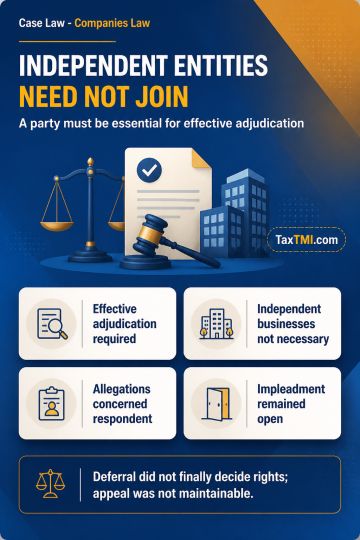
Necessary-party requirements limit impleadment of independent entities, while deferred consideration does not create an appealable adverse determinati...
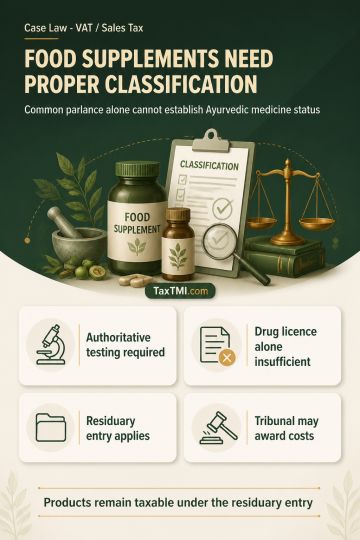
Food supplement classification requires common parlance and authoritative tests, preventing treatment as proprietary Ayurvedic medicines without suppo...
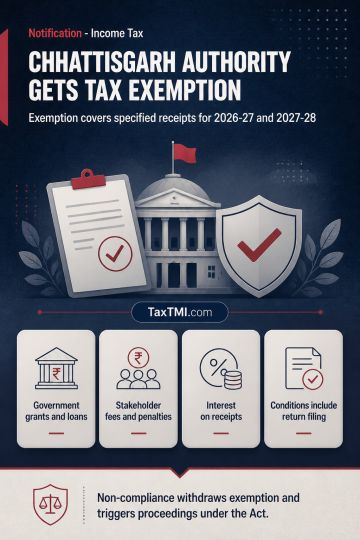
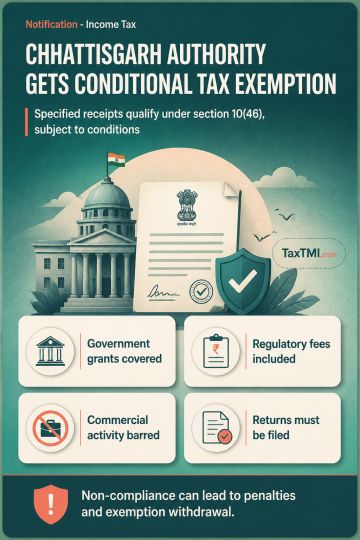
Specified regulatory authority income receives conditional tax exemption, subject to non-commercial activity, unchanged income character, and return f...
Tax exemption for regulatory authority income applies retrospectively, subject to non-commercial activity, unchanged income sources, and return-filing...
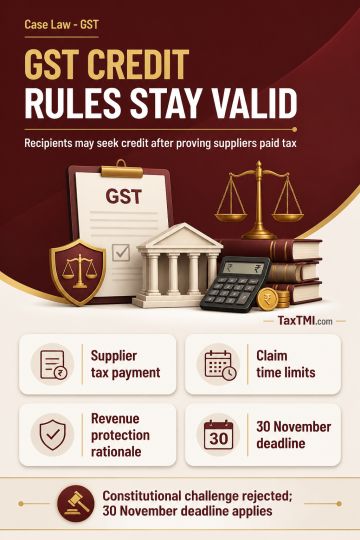
Input tax credit conditions remain constitutionally valid, with eligible recipient claims considered under GST circulars and retrospective filing dead...
The High Court held that the petitioner bank should avail the alternate remedy of appeal u/s 15-T of the SEBI Act against SEBI's order dated January 11, 2023, instead of challenging SEBI's private communications expressing opinion on a legal provision through a writ petition. The Court granted liberty to the petitioner to file an appeal before the Securities Appellate Tribunal (SAT) within four weeks, and directed the SAT to dispose of the appeal on merits without considering the limitation issue. All contentions of parties on merits were left open to be decided by the SAT.
The High Court held that the petitioner bank should avail the alternate remedy of appeal u/s 15-T of the SEBI Act against SEBI's order dated January 11, 2023, instead of challenging SEBI's private communications expressing opinion on a legal provision through a writ petition. The Court granted liberty to the petitioner to file an appeal before the Securities Appellate Tribunal (SAT) within four weeks, and directed the SAT to dispose of the appeal on merits without considering the limitation issue. All contentions of parties on merits were left open to be decided by the SAT.
Note: It is a system-generated summary and is for quick reference only.
 TaxTMI
 of 4805







 Join Channel


 TaxTMI