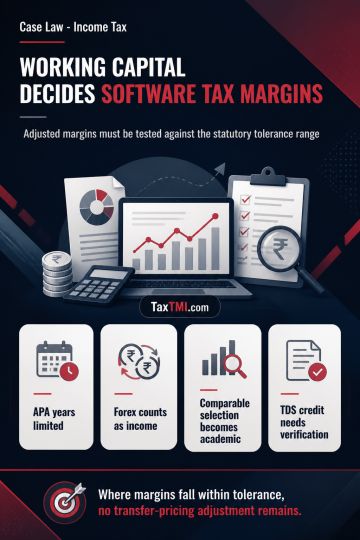
Working-capital adjustment determines whether software-services transfer-pricing margins fall within the statutory tolerance range, eliminating any ad...
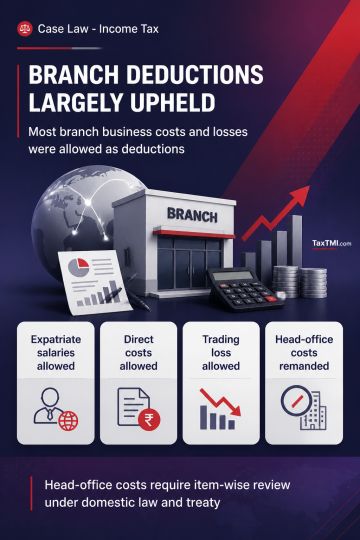
Permanent establishment deductions upheld for expatriate salaries, direct costs and trading losses, while head-office costs require fresh classificati...
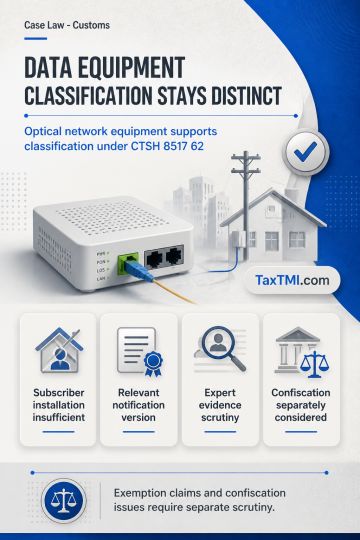
Data transmission equipment classification under CTSH 8517 62 remains distinct from residual classification, with exemption evidence requiring scrutin...
The appellants were held eligible for refund of Cenvat credit u/s 142(3) of the CGST Act, 2017. The Tribunal ruled that Section 142(8)(a) was wrongly invoked to reject the refund claim, as it pertains only to input tax credit and not Cenvat credit for the pre-GST period. Payment u/s 73(3) of the Finance Act, 1994 did not impact admissibility of the Cenvat credit. Rule 9(1)(bb) of the Cenvat Credit Rules, 2004 was inapplicable in this reverse charge scenario without any show cause notice or adjudication order. Consequently, the impugned order was set aside, and the appeal was allowed.
The appellants were held eligible for refund of Cenvat credit u/s 142(3) of the CGST Act, 2017. The Tribunal ruled that Section 142(8)(a) was wrongly invoked to reject the refund claim, as it pertains only to input tax credit and not Cenvat credit for the pre-GST period. Payment u/s 73(3) of the Finance Act, 1994 did not impact admissibility of the Cenvat credit. Rule 9(1)(bb) of the Cenvat Credit Rules, 2004 was inapplicable in this reverse charge scenario without any show cause notice or adjudication order. Consequently, the impugned order was set aside, and the appeal was allowed.
Note: It is a system-generated summary and is for quick reference only.
 TaxTMI
 of 4805








 Join Channel


 TaxTMI