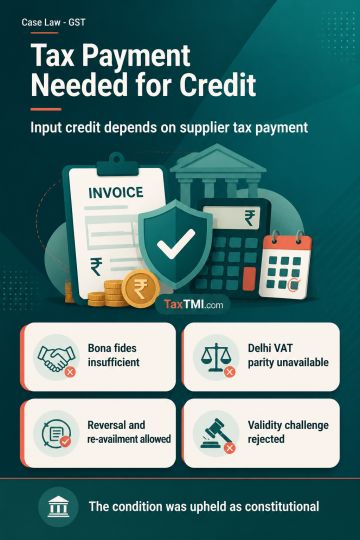
Input tax credit conditions remain constitutionally valid, with eligible recipient claims considered under GST circulars and retrospective filing dead...
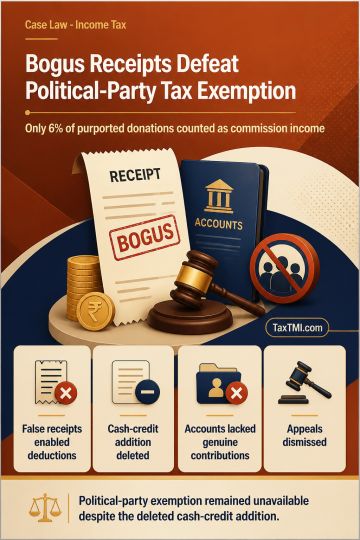
Bogus donation receipts justified commission income assessment and defeated political-party tax exemption for inaccurate accounts and reporting failur...
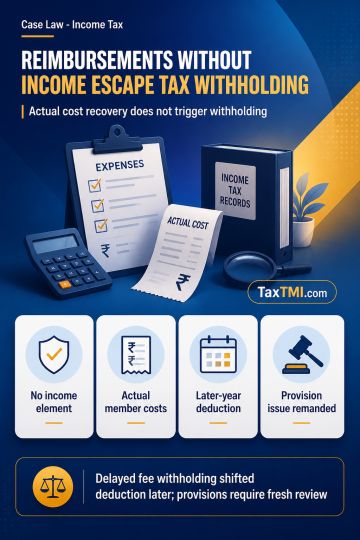
Pure reimbursement without income element escapes tax withholding, while delayed withholding and unsupported provisions face deferred or renewed scrut...
Public benefit requirement defeats charitable registration where residents' association services are reciprocal, member-only facilities governed by mu...
Exempt-income expenditure disallowance is confined to investments that actually generated exempt income, while supported business expenses remain dedu...
The Income Tax Appellate Tribunal held that the assessee's plea towards non-applicability of Section 271AAB of the Income Tax Act was devoid of rationale. The Tribunal affirmed the existence of undisclosed income discovered during the search, based on cogent evidence of unexplained liabilities and unrecorded expenditures, which met the definition of 'undisclosed income' u/s 271AAB. The Tribunal dismissed the assessee's contention regarding the non-existence of undisclosed income, stating that the assessee's conduct accepted the existence of undisclosed income. Regarding the quantum of penalty, the Tribunal observed that while the Assessing Officer imposed a 30% penalty under clause (c) of Section 271AAB(1), there appears to be a legislative aberration wherein an assessee admitting undisclosed income but failing to specify the manner of deriving it faces a higher penalty compared to an assessee who does not make any admission during the search.
The Income Tax Appellate Tribunal held that the assessee's plea towards non-applicability of Section 271AAB of the Income Tax Act was devoid of rationale. The Tribunal affirmed the existence of undisclosed income discovered during the search, based on cogent evidence of unexplained liabilities and unrecorded expenditures, which met the definition of 'undisclosed income' u/s 271AAB. The Tribunal dismissed the assessee's contention regarding the non-existence of undisclosed income, stating that the assessee's conduct accepted the existence of undisclosed income. Regarding the quantum of penalty, the Tribunal observed that while the Assessing Officer imposed a 30% penalty under clause (c) of Section 271AAB(1), there appears to be a legislative aberration wherein an assessee admitting undisclosed income but failing to specify the manner of deriving it faces a higher penalty compared to an assessee who does not make any admission during the search.
Note: It is a system-generated summary and is for quick reference only.
 TaxTMI
  TaxTMI
 of 4823
















 Join Channel