Commercial vehicle depreciation, scientifically determined warranty provisions and exempt-income disallowances were resolved in favour of the taxpayer...
Inherited property sale proceeds require capital-gains treatment where ownership is supported by evidence, not suspicion or unverified signature doubt...
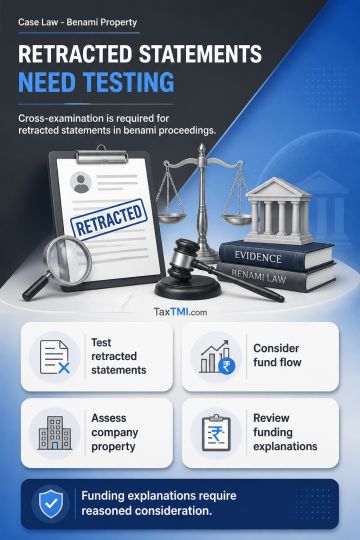
Cross-examination of retracted statements is essential where foundational evidence supports a benami allegation and documented funding explanations re...
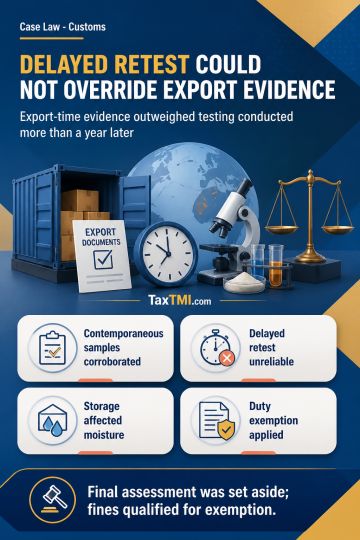
Capital-goods exemption covers plant-modernisation accessories, while the import restriction applies only to earlier capital-goods components and spar...
The Income Tax Appellate Tribunal held that the assessee's plea towards non-applicability of Section 271AAB of the Income Tax Act was devoid of rationale. The Tribunal affirmed the existence of undisclosed income discovered during the search, based on cogent evidence of unexplained liabilities and unrecorded expenditures, which met the definition of 'undisclosed income' u/s 271AAB. The Tribunal dismissed the assessee's contention regarding the non-existence of undisclosed income, stating that the assessee's conduct accepted the existence of undisclosed income. Regarding the quantum of penalty, the Tribunal observed that while the Assessing Officer imposed a 30% penalty under clause (c) of Section 271AAB(1), there appears to be a legislative aberration wherein an assessee admitting undisclosed income but failing to specify the manner of deriving it faces a higher penalty compared to an assessee who does not make any admission during the search.
The Income Tax Appellate Tribunal held that the assessee's plea towards non-applicability of Section 271AAB of the Income Tax Act was devoid of rationale. The Tribunal affirmed the existence of undisclosed income discovered during the search, based on cogent evidence of unexplained liabilities and unrecorded expenditures, which met the definition of 'undisclosed income' u/s 271AAB. The Tribunal dismissed the assessee's contention regarding the non-existence of undisclosed income, stating that the assessee's conduct accepted the existence of undisclosed income. Regarding the quantum of penalty, the Tribunal observed that while the Assessing Officer imposed a 30% penalty under clause (c) of Section 271AAB(1), there appears to be a legislative aberration wherein an assessee admitting undisclosed income but failing to specify the manner of deriving it faces a higher penalty compared to an assessee who does not make any admission during the search.
Note: It is a system-generated summary and is for quick reference only.
 TaxTMI
  TaxTMI
 of 4819

















 Join Channel