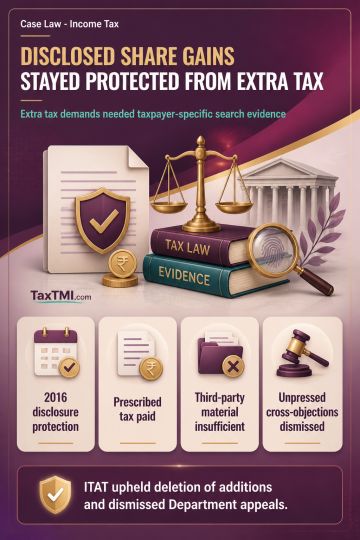
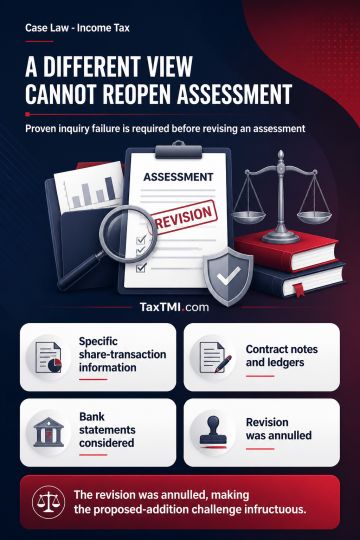
Income Disclosure Scheme immunity and search-material requirements barred further share-transaction additions in unabated assessments under section 15...
Toy balloon tariff classification: functional heading prevails over residual rubber and festive article headings, supporting penalties for deliberate ...
Customs valuation using comparable contemporaneous imports can displace declared value, while missing speaking orders require pursuit before competent...
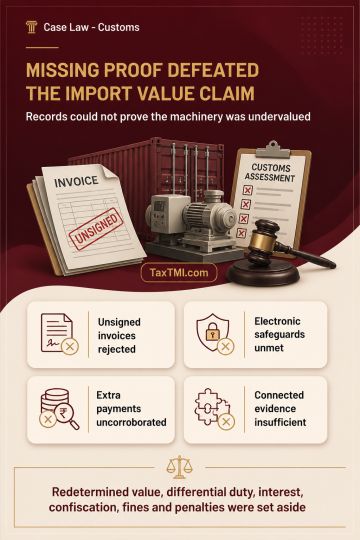
Foreign customs declarations and importer admissions established undervaluation, supporting sequential value redetermination, differential duty, and m...
The Income Tax Appellate Tribunal held that the assessee's plea towards non-applicability of Section 271AAB of the Income Tax Act was devoid of rationale. The Tribunal affirmed the existence of undisclosed income discovered during the search, based on cogent evidence of unexplained liabilities and unrecorded expenditures, which met the definition of 'undisclosed income' u/s 271AAB. The Tribunal dismissed the assessee's contention regarding the non-existence of undisclosed income, stating that the assessee's conduct accepted the existence of undisclosed income. Regarding the quantum of penalty, the Tribunal observed that while the Assessing Officer imposed a 30% penalty under clause (c) of Section 271AAB(1), there appears to be a legislative aberration wherein an assessee admitting undisclosed income but failing to specify the manner of deriving it faces a higher penalty compared to an assessee who does not make any admission during the search.
The Income Tax Appellate Tribunal held that the assessee's plea towards non-applicability of Section 271AAB of the Income Tax Act was devoid of rationale. The Tribunal affirmed the existence of undisclosed income discovered during the search, based on cogent evidence of unexplained liabilities and unrecorded expenditures, which met the definition of 'undisclosed income' u/s 271AAB. The Tribunal dismissed the assessee's contention regarding the non-existence of undisclosed income, stating that the assessee's conduct accepted the existence of undisclosed income. Regarding the quantum of penalty, the Tribunal observed that while the Assessing Officer imposed a 30% penalty under clause (c) of Section 271AAB(1), there appears to be a legislative aberration wherein an assessee admitting undisclosed income but failing to specify the manner of deriving it faces a higher penalty compared to an assessee who does not make any admission during the search.
Note: It is a system-generated summary and is for quick reference only.
 TaxTMI
  TaxTMI
 of 4814
















 Join Channel