Ex parte injunction service requirements were substantially met, while civil recovery and SFIO investigation into provident fund defalcation continued...
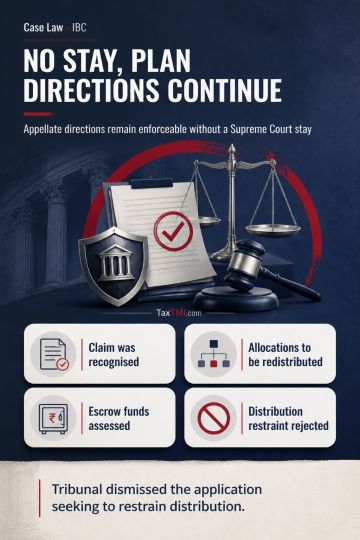
Enforcement of resolution-plan directions continues without a Supreme Court stay, preventing suspension of redistribution and escrowed-fund distributi...
Third-party ownership claims over attached property require Special Court adjudication where purchasers lack registered sale deeds and bona fides rema...
Pure-agent reimbursements in clearing and forwarding services are excluded from taxable value when qualifying third-party payments are properly record...
Customs relief for Strait of Hormuz maritime disruptions remains available, with existing conditions continuing unchanged through the extended validit...
The Income Tax Appellate Tribunal held that the assessee's plea towards non-applicability of Section 271AAB of the Income Tax Act was devoid of rationale. The Tribunal affirmed the existence of undisclosed income discovered during the search, based on cogent evidence of unexplained liabilities and unrecorded expenditures, which met the definition of 'undisclosed income' u/s 271AAB. The Tribunal dismissed the assessee's contention regarding the non-existence of undisclosed income, stating that the assessee's conduct accepted the existence of undisclosed income. Regarding the quantum of penalty, the Tribunal observed that while the Assessing Officer imposed a 30% penalty under clause (c) of Section 271AAB(1), there appears to be a legislative aberration wherein an assessee admitting undisclosed income but failing to specify the manner of deriving it faces a higher penalty compared to an assessee who does not make any admission during the search.
The Income Tax Appellate Tribunal held that the assessee's plea towards non-applicability of Section 271AAB of the Income Tax Act was devoid of rationale. The Tribunal affirmed the existence of undisclosed income discovered during the search, based on cogent evidence of unexplained liabilities and unrecorded expenditures, which met the definition of 'undisclosed income' u/s 271AAB. The Tribunal dismissed the assessee's contention regarding the non-existence of undisclosed income, stating that the assessee's conduct accepted the existence of undisclosed income. Regarding the quantum of penalty, the Tribunal observed that while the Assessing Officer imposed a 30% penalty under clause (c) of Section 271AAB(1), there appears to be a legislative aberration wherein an assessee admitting undisclosed income but failing to specify the manner of deriving it faces a higher penalty compared to an assessee who does not make any admission during the search.
Note: It is a system-generated summary and is for quick reference only.
 TaxTMI
  TaxTMI
 of 4819


















 Join Channel


