Vicarious liability for dishonoured company cheques may extend to non-signatory directors where complaints contain foundational responsibility avermen...
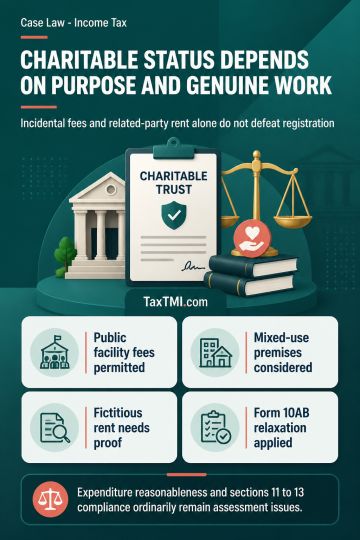
Charitable registration turns on predominant purpose and genuine activities, while incidental fees and related-party rent require supporting adverse m...
MAT book-profit adjustments exclude disallowances for exempt-income expenditure and demerger expenditure unless expressly listed under the statutory c...
The Income Tax Appellate Tribunal held that the assessee's plea towards non-applicability of Section 271AAB of the Income Tax Act was devoid of rationale. The Tribunal affirmed the existence of undisclosed income discovered during the search, based on cogent evidence of unexplained liabilities and unrecorded expenditures, which met the definition of 'undisclosed income' u/s 271AAB. The Tribunal dismissed the assessee's contention regarding the non-existence of undisclosed income, stating that the assessee's conduct accepted the existence of undisclosed income. Regarding the quantum of penalty, the Tribunal observed that while the Assessing Officer imposed a 30% penalty under clause (c) of Section 271AAB(1), there appears to be a legislative aberration wherein an assessee admitting undisclosed income but failing to specify the manner of deriving it faces a higher penalty compared to an assessee who does not make any admission during the search.
The Income Tax Appellate Tribunal held that the assessee's plea towards non-applicability of Section 271AAB of the Income Tax Act was devoid of rationale. The Tribunal affirmed the existence of undisclosed income discovered during the search, based on cogent evidence of unexplained liabilities and unrecorded expenditures, which met the definition of 'undisclosed income' u/s 271AAB. The Tribunal dismissed the assessee's contention regarding the non-existence of undisclosed income, stating that the assessee's conduct accepted the existence of undisclosed income. Regarding the quantum of penalty, the Tribunal observed that while the Assessing Officer imposed a 30% penalty under clause (c) of Section 271AAB(1), there appears to be a legislative aberration wherein an assessee admitting undisclosed income but failing to specify the manner of deriving it faces a higher penalty compared to an assessee who does not make any admission during the search.
Note: It is a system-generated summary and is for quick reference only.
 TaxTMI
  TaxTMI
 of 4817













 Join Channel


