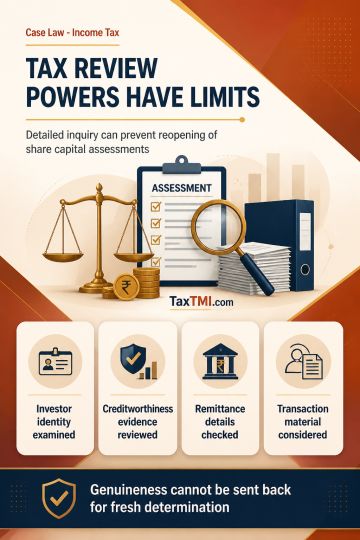
Revisionary jurisdiction cannot reopen share capital assessments where adequate inquiry supports a permissible view and no independent error is establ...
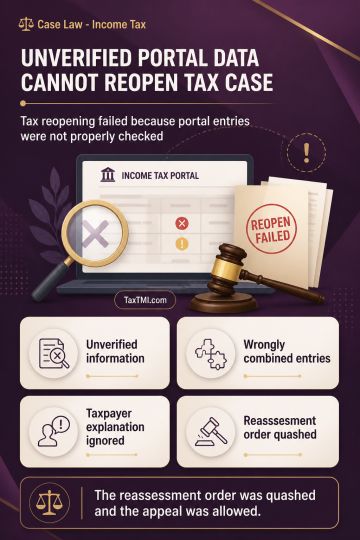
Reassessment jurisdiction fails where unverified portal information is aggregated without examining the taxpayer's explanation or relevance of entries...
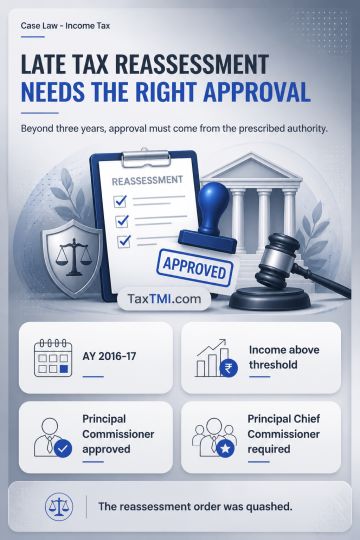
Statutory sanction for delayed reassessment requires approval from the prescribed authority; approval by an inferior authority invalidates jurisdictio...
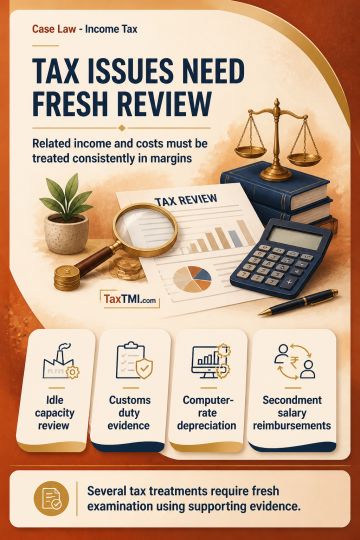
Transfer pricing margin adjustments require matching treatment of non-operating income and related costs, with comparability issues reconsidered on ev...
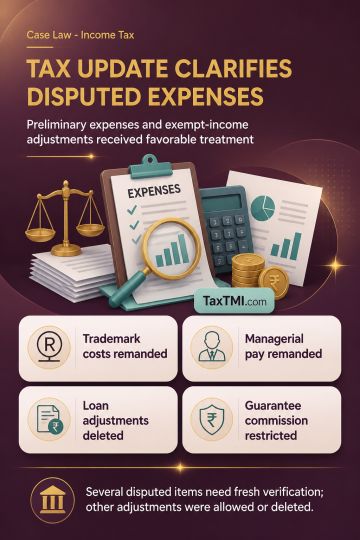
Preliminary-expense amortisation and MAT exempt-income adjustments prevailed, while trademark costs and managerial remuneration require fresh verifica...
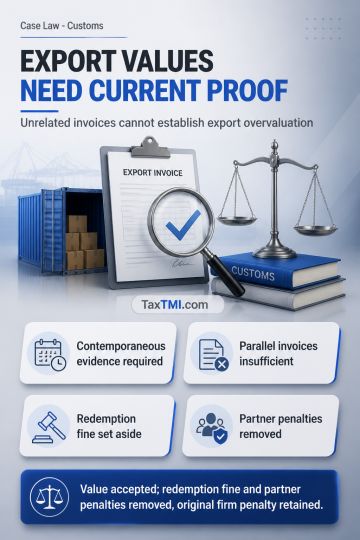
Export valuation requires contemporaneous evidence; unrelated invoices cannot prove overvaluation, and dual penalties on firm and partner are impermis...
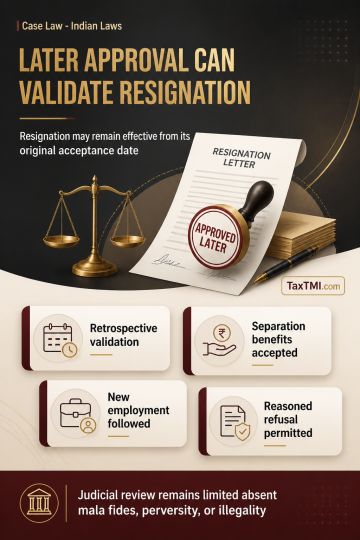
Ratification of resignation acceptance validates separation retrospectively, while withdrawal may be refused through reasoned administrative discretio...
The ITAT ruled in favor of the assessee, allowing the loss incurred in stock option transactions. The Assessing Officer (AO) had disallowed the loss, alleging that the options were sold at unreasonably low prices, even below their intrinsic value. However, the ITAT observed that the AO's conclusion was based solely on conjecture without any corroborative evidence. The assessee had provided contract notes and ledger accounts proving the transactions were conducted through the Bombay Stock Exchange (BSE). Despite this, the revenue authorities neither rebutted nor challenged the authenticity of the submitted documents. The assessee discharged their burden of proof, and the onus shifted to the revenue authorities, who failed to bring any comparative data or evidence to substantiate their claims. Consequently, the ITAT set aside the impugned appellate order and deleted the addition, deciding in favor of the assessee.
The ITAT ruled in favor of the assessee, allowing the loss incurred in stock option transactions. The Assessing Officer (AO) had disallowed the loss, alleging that the options were sold at unreasonably low prices, even below their intrinsic value. However, the ITAT observed that the AO's conclusion was based solely on conjecture without any corroborative evidence. The assessee had provided contract notes and ledger accounts proving the transactions were conducted through the Bombay Stock Exchange (BSE). Despite this, the revenue authorities neither rebutted nor challenged the authenticity of the submitted documents. The assessee discharged their burden of proof, and the onus shifted to the revenue authorities, who failed to bring any comparative data or evidence to substantiate their claims. Consequently, the ITAT set aside the impugned appellate order and deleted the addition, deciding in favor of the assessee.
Note: It is a system-generated summary and is for quick reference only.
 TaxTMI
  TaxTMI
 of 4817











 Join Channel


