Charitable registration renewal cannot become an assessment of receipts, profitability or annual exemption compliance, requiring renewal and donation ...
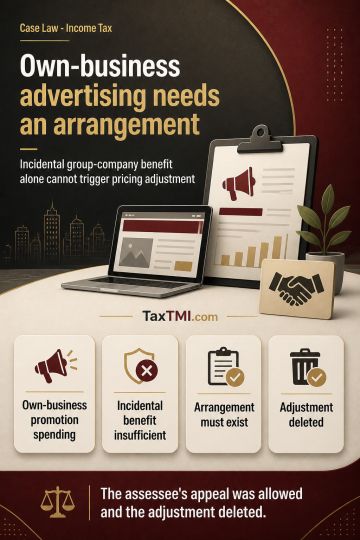
AMP expenditure for own business is not an international transaction without an associated-enterprise arrangement, eliminating transfer pricing adjust...
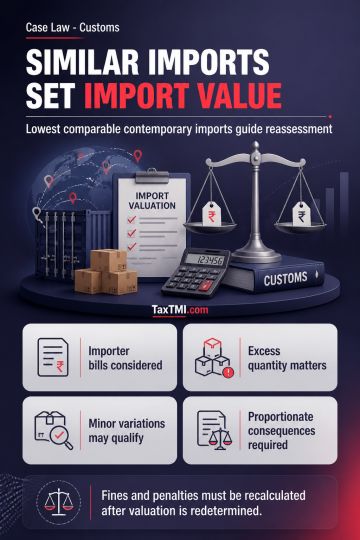
Customs valuation must use comparable contemporary imports, while confiscation fines and penalties require proportionate recalculation on reassessed v...
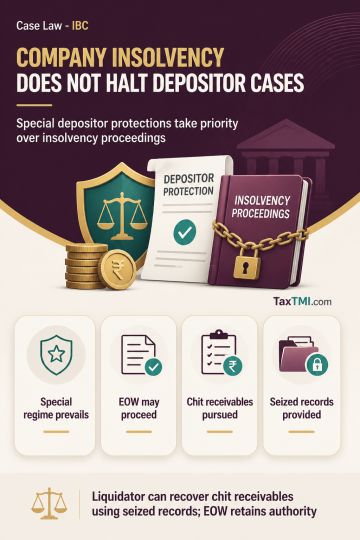
Depositor-protection proceedings prevail over corporate insolvency, while liquidators may recover chit receivables using copies of seized company reco...
Intermediary service classification fails where overseas admission facilitation is supplied independently, preserving export treatment and small-provi...
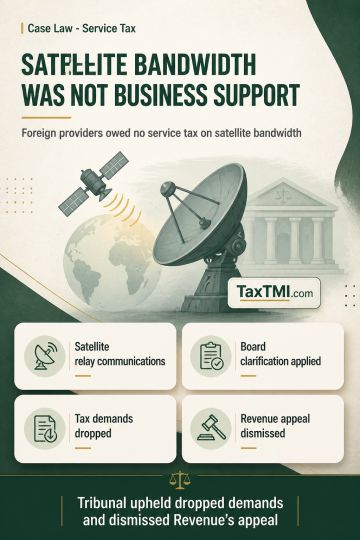
Satellite transponder bandwidth is telecommunication, not Business Support Service; foreign non-telegraph providers triggered no service tax liability...
The ITAT ruled in favor of the assessee, allowing the loss incurred in stock option transactions. The Assessing Officer (AO) had disallowed the loss, alleging that the options were sold at unreasonably low prices, even below their intrinsic value. However, the ITAT observed that the AO's conclusion was based solely on conjecture without any corroborative evidence. The assessee had provided contract notes and ledger accounts proving the transactions were conducted through the Bombay Stock Exchange (BSE). Despite this, the revenue authorities neither rebutted nor challenged the authenticity of the submitted documents. The assessee discharged their burden of proof, and the onus shifted to the revenue authorities, who failed to bring any comparative data or evidence to substantiate their claims. Consequently, the ITAT set aside the impugned appellate order and deleted the addition, deciding in favor of the assessee.
The ITAT ruled in favor of the assessee, allowing the loss incurred in stock option transactions. The Assessing Officer (AO) had disallowed the loss, alleging that the options were sold at unreasonably low prices, even below their intrinsic value. However, the ITAT observed that the AO's conclusion was based solely on conjecture without any corroborative evidence. The assessee had provided contract notes and ledger accounts proving the transactions were conducted through the Bombay Stock Exchange (BSE). Despite this, the revenue authorities neither rebutted nor challenged the authenticity of the submitted documents. The assessee discharged their burden of proof, and the onus shifted to the revenue authorities, who failed to bring any comparative data or evidence to substantiate their claims. Consequently, the ITAT set aside the impugned appellate order and deleted the addition, deciding in favor of the assessee.
Note: It is a system-generated summary and is for quick reference only.
 TaxTMI
  TaxTMI
 of 4814





 Join Channel


