Commercial vehicle depreciation, scientifically determined warranty provisions and exempt-income disallowances were resolved in favour of the taxpayer...
Inherited property sale proceeds require capital-gains treatment where ownership is supported by evidence, not suspicion or unverified signature doubt...
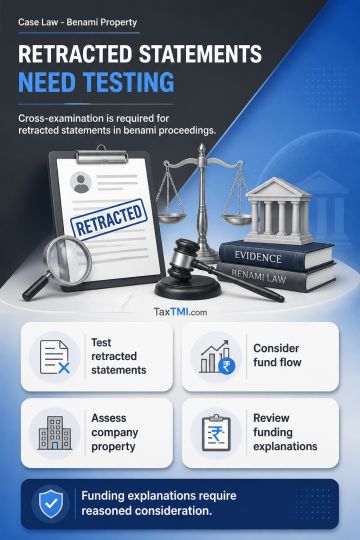
Cross-examination of retracted statements is essential where foundational evidence supports a benami allegation and documented funding explanations re...
Capital-goods exemption covers plant-modernisation accessories, while the import restriction applies only to earlier capital-goods components and spar...
Page of 4819
Press 'Enter' after typing page number.
781 to 800 of 96365 Results
❮
❯
❯❯
0 / 200
Expand Note
Add to Folder
No Folders have been created
+
Are you sure you want to delete "My most important" ?
The CESTAT allowed the appeal in part by modifying the impugned order. It set aside the revocation of the Customs Broker's license and forfeiture of security deposit, as there was no violation of Regulations 1(4), 10(d), 10(n), and 13(12) of the Customs Brokers Licensing Regulations (CBLR), 2018. However, a penalty of Rs. 5,000 was imposed on the Customs Broker for violating Regulation 10(e) due to failure to exercise due diligence in handling documents while filing import declarations. The Tribunal held that the Customs Broker cannot be faulted for misdeclaration by the importer, as they filed the bill of entry based on documents provided. The delay in inquiry proceedings was not properly explained, and the entire blame cannot be placed on the Customs Broker.
The CESTAT allowed the appeal in part by modifying the impugned order. It set aside the revocation of the Customs Broker's license and forfeiture of security deposit, as there was no violation of Regulations 1(4), 10(d), 10(n), and 13(12) of the Customs Brokers Licensing Regulations (CBLR), 2018. However, a penalty of Rs. 5,000 was imposed on the Customs Broker for violating Regulation 10(e) due to failure to exercise due diligence in handling documents while filing import declarations. The Tribunal held that the Customs Broker cannot be faulted for misdeclaration by the importer, as they filed the bill of entry based on documents provided. The delay in inquiry proceedings was not properly explained, and the entire blame cannot be placed on the Customs Broker.
Note: It is a system-generated summary and is for quick reference only.
 TaxTMI
  TaxTMI
 of 4819







 Join Channel