Charitable registration renewal cannot become an assessment of receipts, profitability or annual exemption compliance, requiring renewal and donation ...
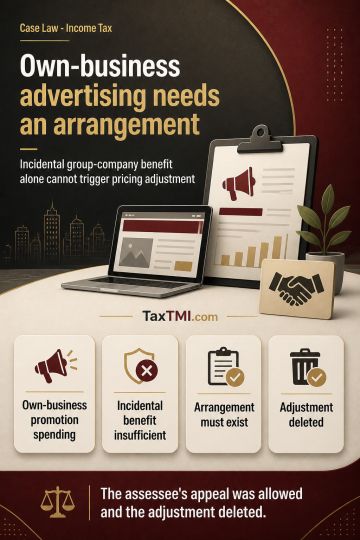
AMP expenditure for own business is not an international transaction without an associated-enterprise arrangement, eliminating transfer pricing adjust...
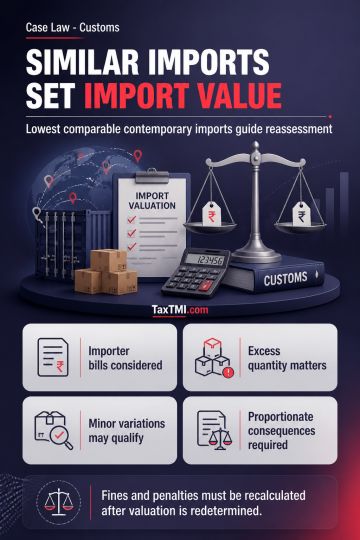
Customs valuation must use comparable contemporary imports, while confiscation fines and penalties require proportionate recalculation on reassessed v...
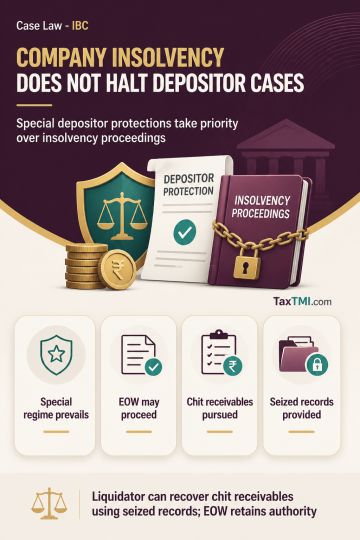
Depositor-protection proceedings prevail over corporate insolvency, while liquidators may recover chit receivables using copies of seized company reco...
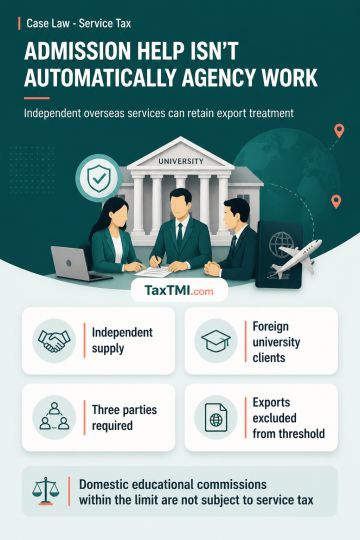
Intermediary service classification fails where overseas admission facilitation is supplied independently, preserving export treatment and small-provi...
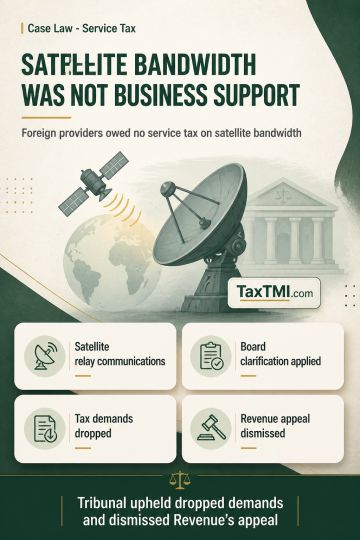
Satellite transponder bandwidth is telecommunication, not Business Support Service; foreign non-telegraph providers triggered no service tax liability...
The CESTAT allowed the appeal in part by modifying the impugned order. It set aside the revocation of the Customs Broker's license and forfeiture of security deposit, as there was no violation of Regulations 1(4), 10(d), 10(n), and 13(12) of the Customs Brokers Licensing Regulations (CBLR), 2018. However, a penalty of Rs. 5,000 was imposed on the Customs Broker for violating Regulation 10(e) due to failure to exercise due diligence in handling documents while filing import declarations. The Tribunal held that the Customs Broker cannot be faulted for misdeclaration by the importer, as they filed the bill of entry based on documents provided. The delay in inquiry proceedings was not properly explained, and the entire blame cannot be placed on the Customs Broker.
The CESTAT allowed the appeal in part by modifying the impugned order. It set aside the revocation of the Customs Broker's license and forfeiture of security deposit, as there was no violation of Regulations 1(4), 10(d), 10(n), and 13(12) of the Customs Brokers Licensing Regulations (CBLR), 2018. However, a penalty of Rs. 5,000 was imposed on the Customs Broker for violating Regulation 10(e) due to failure to exercise due diligence in handling documents while filing import declarations. The Tribunal held that the Customs Broker cannot be faulted for misdeclaration by the importer, as they filed the bill of entry based on documents provided. The delay in inquiry proceedings was not properly explained, and the entire blame cannot be placed on the Customs Broker.
Note: It is a system-generated summary and is for quick reference only.
 TaxTMI
  TaxTMI
 of 4816




 Join Channel


