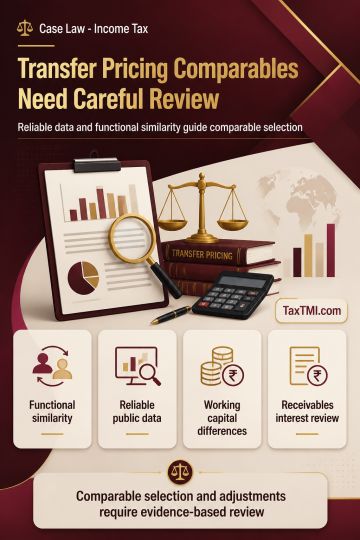
Transfer pricing comparability requires functional alignment, reliable financial data, and careful review of working capital and receivables adjustmen...
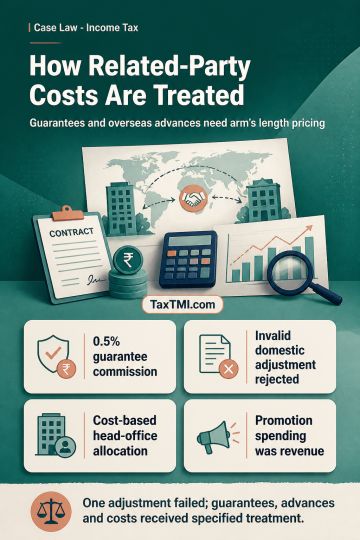
Transfer pricing rules require benchmarking corporate guarantees and associated-enterprise advances, while invalid domestic-transaction adjustments ca...
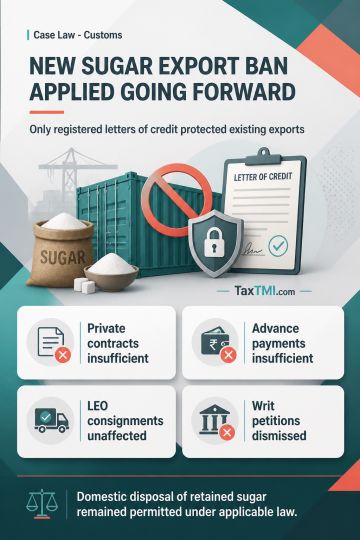
Prospective sugar export prohibition required registered letters of credit; private contracts and export quotas created no enforceable continuation ri...
Retroactive interim-moratorium exclusion permits protective asset disclosure and preservation measures against personal guarantors pending arbitration...
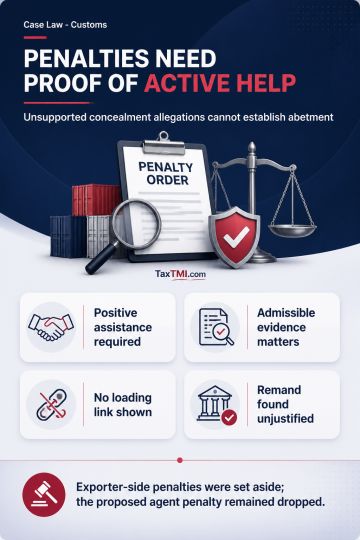
The CESTAT held that Section 28AAA of the Customs Act, 1962, invoked by the Revenue for recovery of duty foregone, requires establishing collusion, willful misrepresentation or suppression of facts at the time of obtaining the instrument for exemption. Mere non-repatriation of export proceeds does not automatically erase eligibility for exemption. The Tribunal found no evidence of the required ingredients u/s 28AAA to justify recovery of duty foregone or cancellation of bank realization certificates. The alleged mis-declaration of goods did not warrant confiscation u/s 113(d) as the goods were not prohibited for export. The demands for recovery of drawback, duty foregone, and confiscation of goods were quashed. Penalties imposed on individuals were also set aside due to lack of sustainable grounds. The Tribunal dismissed the Revenue's appeals and allowed the appeals of exporters and individuals.
The CESTAT held that Section 28AAA of the Customs Act, 1962, invoked by the Revenue for recovery of duty foregone, requires establishing collusion, willful misrepresentation or suppression of facts at the time of obtaining the instrument for exemption. Mere non-repatriation of export proceeds does not automatically erase eligibility for exemption. The Tribunal found no evidence of the required ingredients u/s 28AAA to justify recovery of duty foregone or cancellation of bank realization certificates. The alleged mis-declaration of goods did not warrant confiscation u/s 113(d) as the goods were not prohibited for export. The demands for recovery of drawback, duty foregone, and confiscation of goods were quashed. Penalties imposed on individuals were also set aside due to lack of sustainable grounds. The Tribunal dismissed the Revenue's appeals and allowed the appeals of exporters and individuals.
Note: It is a system-generated summary and is for quick reference only.
 TaxTMI
  TaxTMI
 of 4823






 Join Channel