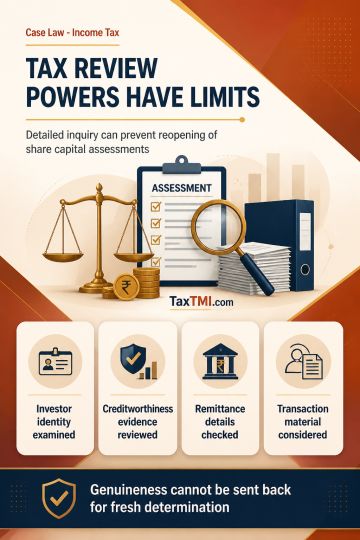
Revisionary jurisdiction cannot reopen share capital assessments where adequate inquiry supports a permissible view and no independent error is establ...
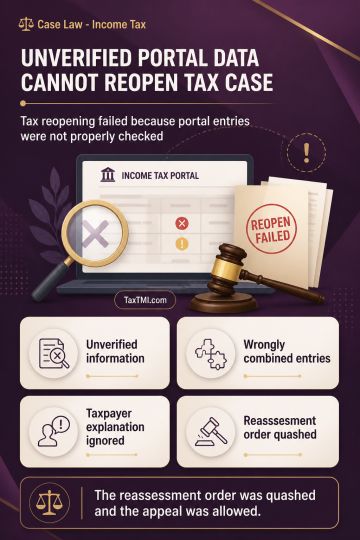
Reassessment jurisdiction fails where unverified portal information is aggregated without examining the taxpayer's explanation or relevance of entries...
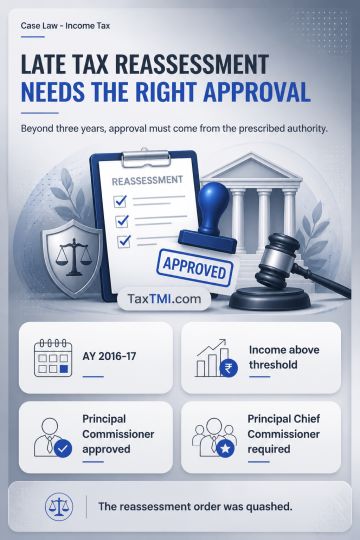
Statutory sanction for delayed reassessment requires approval from the prescribed authority; approval by an inferior authority invalidates jurisdictio...
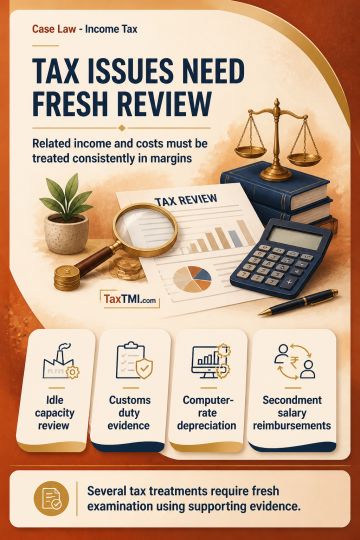
Transfer pricing margin adjustments require matching treatment of non-operating income and related costs, with comparability issues reconsidered on ev...
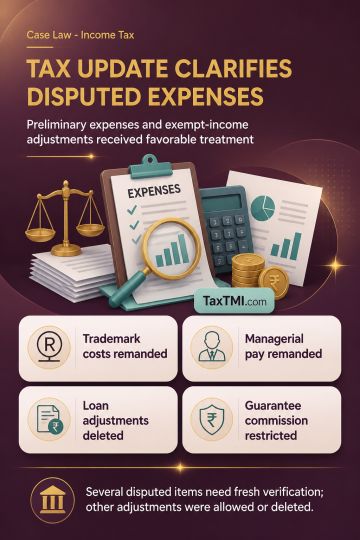
Preliminary-expense amortisation and MAT exempt-income adjustments prevailed, while trademark costs and managerial remuneration require fresh verifica...
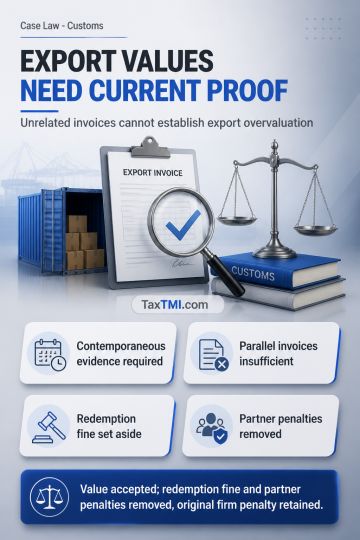
Export valuation requires contemporaneous evidence; unrelated invoices cannot prove overvaluation, and dual penalties on firm and partner are impermis...
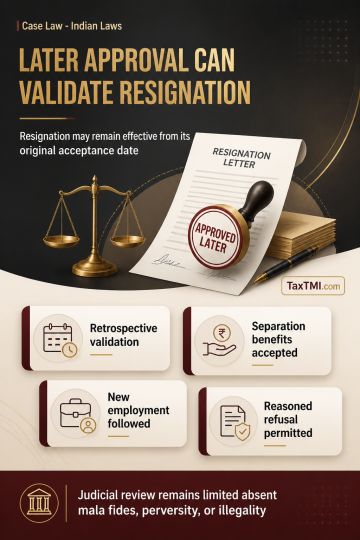
Ratification of resignation acceptance validates separation retrospectively, while withdrawal may be refused through reasoned administrative discretio...
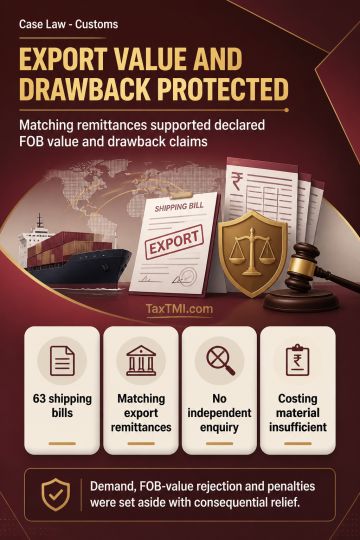
The CESTAT held that Section 28AAA of the Customs Act, 1962, invoked by the Revenue for recovery of duty foregone, requires establishing collusion, willful misrepresentation or suppression of facts at the time of obtaining the instrument for exemption. Mere non-repatriation of export proceeds does not automatically erase eligibility for exemption. The Tribunal found no evidence of the required ingredients u/s 28AAA to justify recovery of duty foregone or cancellation of bank realization certificates. The alleged mis-declaration of goods did not warrant confiscation u/s 113(d) as the goods were not prohibited for export. The demands for recovery of drawback, duty foregone, and confiscation of goods were quashed. Penalties imposed on individuals were also set aside due to lack of sustainable grounds. The Tribunal dismissed the Revenue's appeals and allowed the appeals of exporters and individuals.
The CESTAT held that Section 28AAA of the Customs Act, 1962, invoked by the Revenue for recovery of duty foregone, requires establishing collusion, willful misrepresentation or suppression of facts at the time of obtaining the instrument for exemption. Mere non-repatriation of export proceeds does not automatically erase eligibility for exemption. The Tribunal found no evidence of the required ingredients u/s 28AAA to justify recovery of duty foregone or cancellation of bank realization certificates. The alleged mis-declaration of goods did not warrant confiscation u/s 113(d) as the goods were not prohibited for export. The demands for recovery of drawback, duty foregone, and confiscation of goods were quashed. Penalties imposed on individuals were also set aside due to lack of sustainable grounds. The Tribunal dismissed the Revenue's appeals and allowed the appeals of exporters and individuals.
Note: It is a system-generated summary and is for quick reference only.
 TaxTMI
  TaxTMI
 of 4817









 Join Channel


