Authentication of paper assessment orders upheld, while qualifying repairs, consumables and vendor advance write-offs remain deductible business claim...
Transaction value cannot be rejected solely on non-statutory valuation guidelines without corroborative evidence supporting reassessment of final cust...
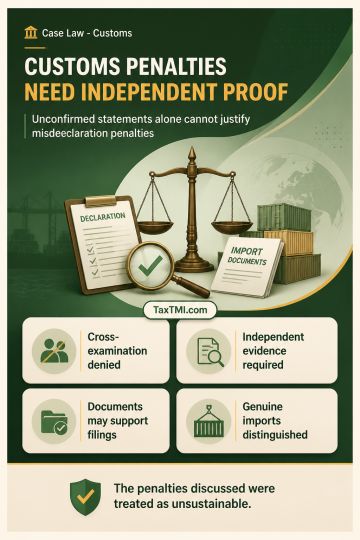
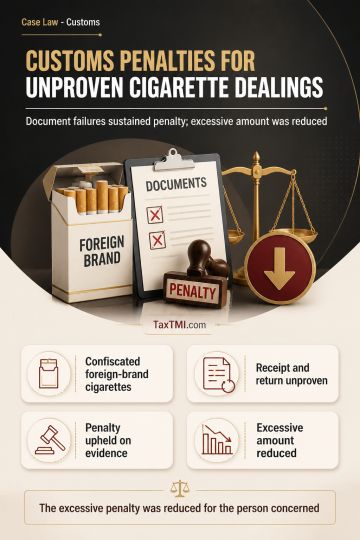
Cross-examination rights and corroborated evidence limit customs penalties for misdeclaration in genuine import transactions involving documented clea...
Tariff classification of vehicle gear components follows the specific gearing entry, displacing motor-vehicle parts classification and related liabili...
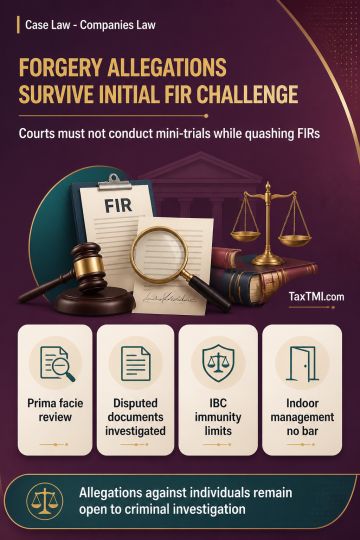
The High Court dismissed the petition challenging the show cause notice issued by SEBI. The key findings were: the arguments of delay, laches, review, revisit, double jeopardy, and res judicata were not accepted to quash the notice at this stage, allowing petitioners to raise such defenses before SEBI. The Court found no non-application of mind by SEBI in issuing the notice based on the available material. SEBI agreed to provide certain information related to an earlier complaint within two weeks. Petitioners were granted four weeks after receiving that information to file their response to the show cause notice. The Court declined to interfere further, stating that fairness is a two-way process, and prolonging adjudication unnecessarily should be avoided. The extraordinary jurisdiction was not meant for stalling proceedings at every stage.
The High Court dismissed the petition challenging the show cause notice issued by SEBI. The key findings were: the arguments of delay, laches, review, revisit, double jeopardy, and res judicata were not accepted to quash the notice at this stage, allowing petitioners to raise such defenses before SEBI. The Court found no non-application of mind by SEBI in issuing the notice based on the available material. SEBI agreed to provide certain information related to an earlier complaint within two weeks. Petitioners were granted four weeks after receiving that information to file their response to the show cause notice. The Court declined to interfere further, stating that fairness is a two-way process, and prolonging adjudication unnecessarily should be avoided. The extraordinary jurisdiction was not meant for stalling proceedings at every stage.
Note: It is a system-generated summary and is for quick reference only.
 TaxTMI
  TaxTMI
 of 4826

















 Join Channel


