Donor-directed corpus contributions retain capital character despite exemption claims under section 10(23C)(vi), preventing their treatment as taxable...
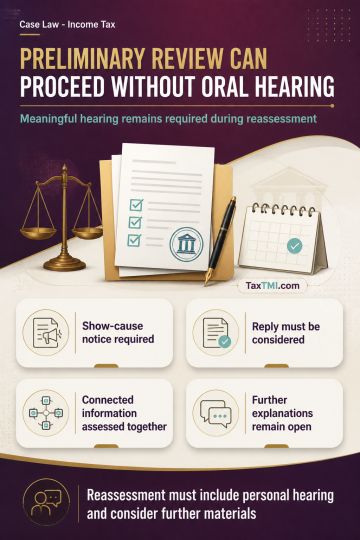
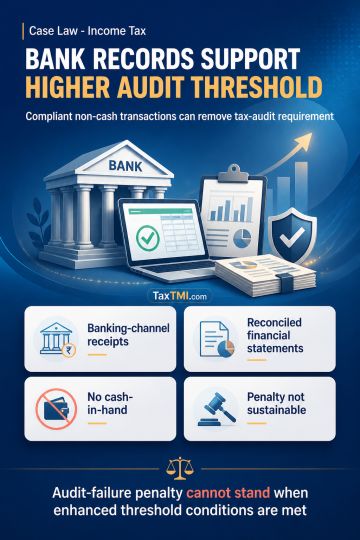
Enhanced tax-audit threshold applies where banking records establish compliant non-cash receipts and payments, eliminating penalty exposure for audit ...
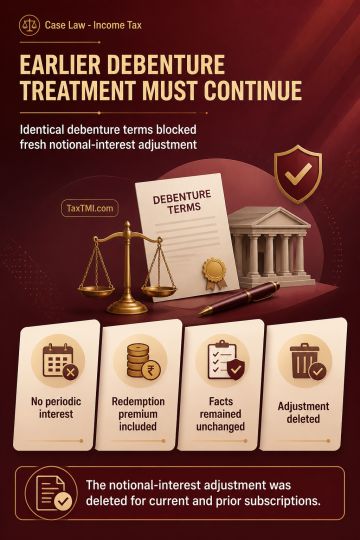
Transfer pricing consistency protects identical non-interest-bearing debenture terms from a later notional-interest adjustment without valid statutory...
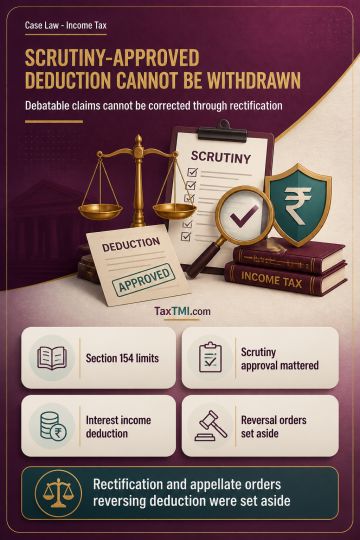
Rectification of debatable deduction claims cannot reverse scrutiny-approved co-operative society interest income deductions as apparent record errors...
Cash-method accounting bars presumptive interest taxation, while unsupported securities and share-trading additions require reliable material and veri...
The High Court dismissed the petition challenging the show cause notice issued by SEBI. The key findings were: the arguments of delay, laches, review, revisit, double jeopardy, and res judicata were not accepted to quash the notice at this stage, allowing petitioners to raise such defenses before SEBI. The Court found no non-application of mind by SEBI in issuing the notice based on the available material. SEBI agreed to provide certain information related to an earlier complaint within two weeks. Petitioners were granted four weeks after receiving that information to file their response to the show cause notice. The Court declined to interfere further, stating that fairness is a two-way process, and prolonging adjudication unnecessarily should be avoided. The extraordinary jurisdiction was not meant for stalling proceedings at every stage.
The High Court dismissed the petition challenging the show cause notice issued by SEBI. The key findings were: the arguments of delay, laches, review, revisit, double jeopardy, and res judicata were not accepted to quash the notice at this stage, allowing petitioners to raise such defenses before SEBI. The Court found no non-application of mind by SEBI in issuing the notice based on the available material. SEBI agreed to provide certain information related to an earlier complaint within two weeks. Petitioners were granted four weeks after receiving that information to file their response to the show cause notice. The Court declined to interfere further, stating that fairness is a two-way process, and prolonging adjudication unnecessarily should be avoided. The extraordinary jurisdiction was not meant for stalling proceedings at every stage.
Note: It is a system-generated summary and is for quick reference only.
 TaxTMI
  TaxTMI
 of 4816














 Join Channel


