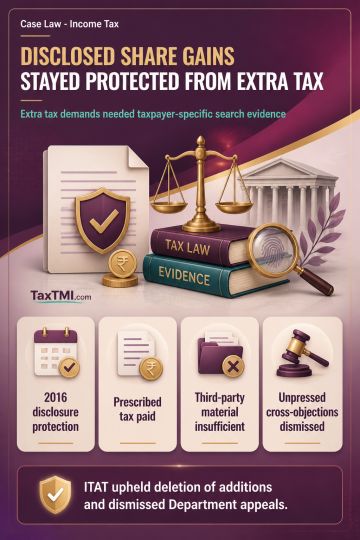
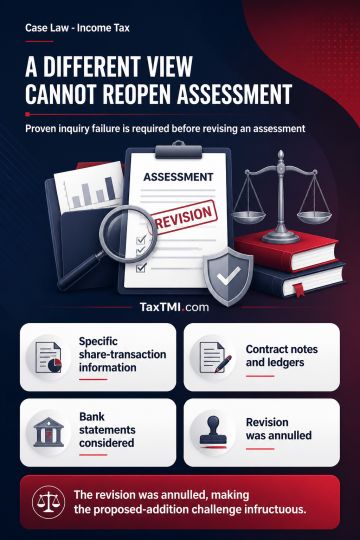
Income Disclosure Scheme immunity and search-material requirements barred further share-transaction additions in unabated assessments under section 15...
Toy balloon tariff classification: functional heading prevails over residual rubber and festive article headings, supporting penalties for deliberate ...
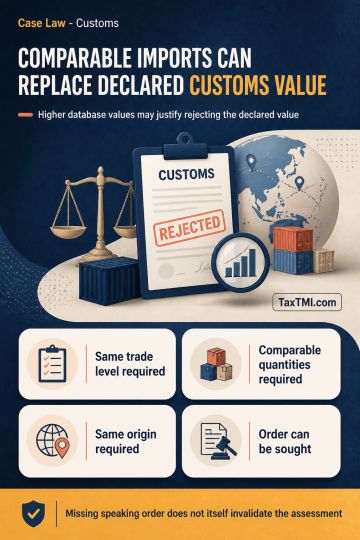
Customs valuation using comparable contemporaneous imports can displace declared value, while missing speaking orders require pursuit before competent...
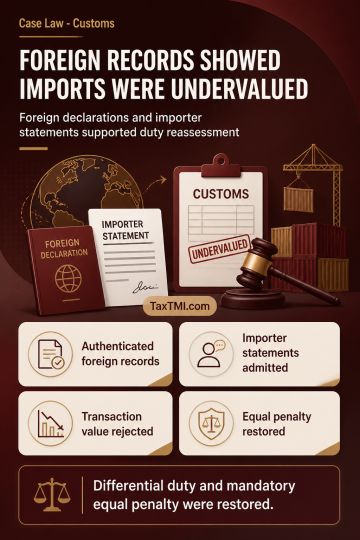
Foreign customs declarations and importer admissions established undervaluation, supporting sequential value redetermination, differential duty, and m...
The petitioner-accused and the complainant-respondent settled the matter related to dishonor of cheque. The High Court accepted the prayer for compounding the offence u/s 147 of the Negotiable Instruments Act, 1881, following the Supreme Court's guidelines in Damodar S. Prabhu v. Sayed Babalal H. Noting the non-obstante clause in Section 147, the Court held that compounding is controlled by this provision, not Section 320 of CrPC. Relying on K. Subramanian v. R. Rajathi, the Court allowed compounding even after conviction. Consequently, the conviction and sentence were quashed, and the petitioner-accused was acquitted u/s 138 of the Act.
The petitioner-accused and the complainant-respondent settled the matter related to dishonor of cheque. The High Court accepted the prayer for compounding the offence u/s 147 of the Negotiable Instruments Act, 1881, following the Supreme Court's guidelines in Damodar S. Prabhu v. Sayed Babalal H. Noting the non-obstante clause in Section 147, the Court held that compounding is controlled by this provision, not Section 320 of CrPC. Relying on K. Subramanian v. R. Rajathi, the Court allowed compounding even after conviction. Consequently, the conviction and sentence were quashed, and the petitioner-accused was acquitted u/s 138 of the Act.
Note: It is a system-generated summary and is for quick reference only.
 TaxTMI
  TaxTMI
 of 4816











 Join Channel