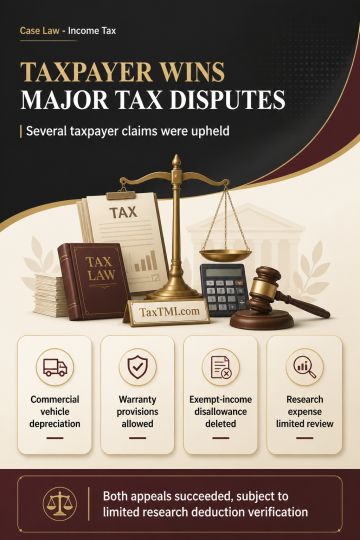
Commercial vehicle depreciation, scientifically determined warranty provisions and exempt-income disallowances were resolved in favour of the taxpayer...
Inherited property sale proceeds require capital-gains treatment where ownership is supported by evidence, not suspicion or unverified signature doubt...
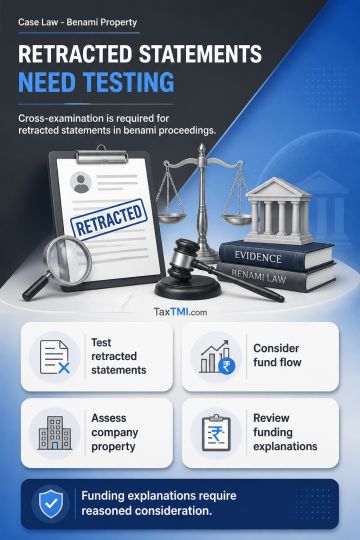
Cross-examination of retracted statements is essential where foundational evidence supports a benami allegation and documented funding explanations re...
The petitioner-accused and the complainant-respondent settled the matter related to dishonor of cheque. The High Court accepted the prayer for compounding the offence u/s 147 of the Negotiable Instruments Act, 1881, following the Supreme Court's guidelines in Damodar S. Prabhu v. Sayed Babalal H. Noting the non-obstante clause in Section 147, the Court held that compounding is controlled by this provision, not Section 320 of CrPC. Relying on K. Subramanian v. R. Rajathi, the Court allowed compounding even after conviction. Consequently, the conviction and sentence were quashed, and the petitioner-accused was acquitted u/s 138 of the Act.
The petitioner-accused and the complainant-respondent settled the matter related to dishonor of cheque. The High Court accepted the prayer for compounding the offence u/s 147 of the Negotiable Instruments Act, 1881, following the Supreme Court's guidelines in Damodar S. Prabhu v. Sayed Babalal H. Noting the non-obstante clause in Section 147, the Court held that compounding is controlled by this provision, not Section 320 of CrPC. Relying on K. Subramanian v. R. Rajathi, the Court allowed compounding even after conviction. Consequently, the conviction and sentence were quashed, and the petitioner-accused was acquitted u/s 138 of the Act.
Note: It is a system-generated summary and is for quick reference only.
 TaxTMI
  TaxTMI
 of 4821













 Join Channel