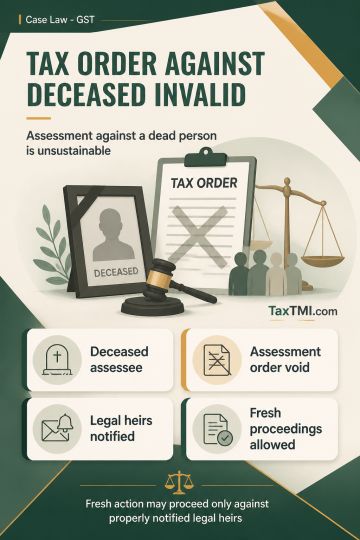
Mutual fund maturity rules require proper rollover, redemption, disclosure, and due diligence; investor gains cannot excuse regulatory breaches or pen...
Threshold exemption excludes exempt services, while stamp-paper purchases avoid reverse charge; consequential service tax penalties were also set asid...
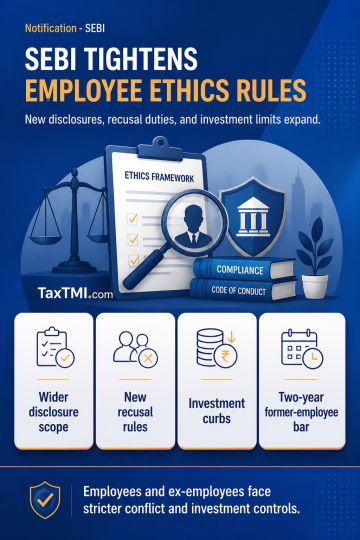
Employee conflict disclosures and investment restrictions expand with new recusal duties, post-employment limits, and compliance reporting requirement...
The High Court allowed the petition and quashed the impugned order rejecting the petitioner's refund application for unutilized input tax credit. The court held that the Notification No. 14/2022 amending Rule 89(5) of the GST Rules is clarificatory and curative in nature, rectifying the anomaly in the refund formula. Relying on Supreme Court precedents, the court ruled that such a clarificatory amendment operates retrospectively. Therefore, the amended Rule 89(5) would apply to refund or rectification applications filed within the two-year period u/s 54(1) of the GST Act, irrespective of the Central Board of Indirect Taxes and Customs (CBIC) circular restricting its applicability prospectively. Denying retrospective benefit would discriminate against assessees who applied for refunds before the amendment's issuance. The court quashed the circular's clarification treating the amendment as prospective and allowed the petitioner's refund claim based on the rectified formula.
The High Court allowed the petition and quashed the impugned order rejecting the petitioner's refund application for unutilized input tax credit. The court held that the Notification No. 14/2022 amending Rule 89(5) of the GST Rules is clarificatory and curative in nature, rectifying the anomaly in the refund formula. Relying on Supreme Court precedents, the court ruled that such a clarificatory amendment operates retrospectively. Therefore, the amended Rule 89(5) would apply to refund or rectification applications filed within the two-year period u/s 54(1) of the GST Act, irrespective of the Central Board of Indirect Taxes and Customs (CBIC) circular restricting its applicability prospectively. Denying retrospective benefit would discriminate against assessees who applied for refunds before the amendment's issuance. The court quashed the circular's clarification treating the amendment as prospective and allowed the petitioner's refund claim based on the rectified formula.
Note: It is a system-generated summary and is for quick reference only.
 TaxTMI
  TaxTMI
 of 4807















 Join Channel