Business expenditure deduction requires proof of genuine commission payments and commercial allowability; turnover growth alone cannot validate the cl...
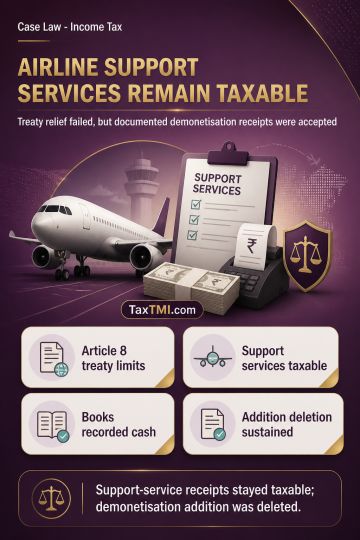
Article 8 treaty coverage excluded third-party airline support services, while documented demonetisation cash receipts remained accepted business inco...
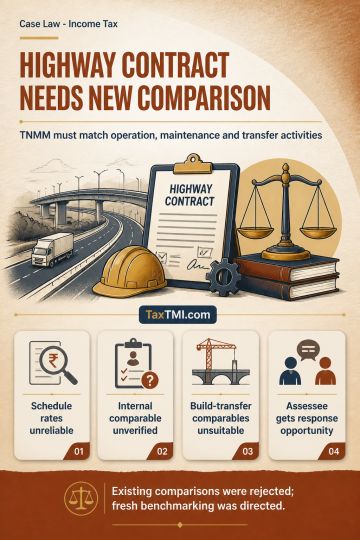
Functional comparability under TNMM requires highway contract benchmarks to reflect operation, maintenance and transfer activities, requiring fresh be...
The High Court allowed the petition and quashed the impugned order rejecting the petitioner's refund application for unutilized input tax credit. The court held that the Notification No. 14/2022 amending Rule 89(5) of the GST Rules is clarificatory and curative in nature, rectifying the anomaly in the refund formula. Relying on Supreme Court precedents, the court ruled that such a clarificatory amendment operates retrospectively. Therefore, the amended Rule 89(5) would apply to refund or rectification applications filed within the two-year period u/s 54(1) of the GST Act, irrespective of the Central Board of Indirect Taxes and Customs (CBIC) circular restricting its applicability prospectively. Denying retrospective benefit would discriminate against assessees who applied for refunds before the amendment's issuance. The court quashed the circular's clarification treating the amendment as prospective and allowed the petitioner's refund claim based on the rectified formula.
The High Court allowed the petition and quashed the impugned order rejecting the petitioner's refund application for unutilized input tax credit. The court held that the Notification No. 14/2022 amending Rule 89(5) of the GST Rules is clarificatory and curative in nature, rectifying the anomaly in the refund formula. Relying on Supreme Court precedents, the court ruled that such a clarificatory amendment operates retrospectively. Therefore, the amended Rule 89(5) would apply to refund or rectification applications filed within the two-year period u/s 54(1) of the GST Act, irrespective of the Central Board of Indirect Taxes and Customs (CBIC) circular restricting its applicability prospectively. Denying retrospective benefit would discriminate against assessees who applied for refunds before the amendment's issuance. The court quashed the circular's clarification treating the amendment as prospective and allowed the petitioner's refund claim based on the rectified formula.
Note: It is a system-generated summary and is for quick reference only.
 TaxTMI
 of 4805






 Join Channel


 TaxTMI