Transaction value rejection requires reliable corroboration; refundable VAT is excluded and temporary registration does not defeat new-vehicle exempti...
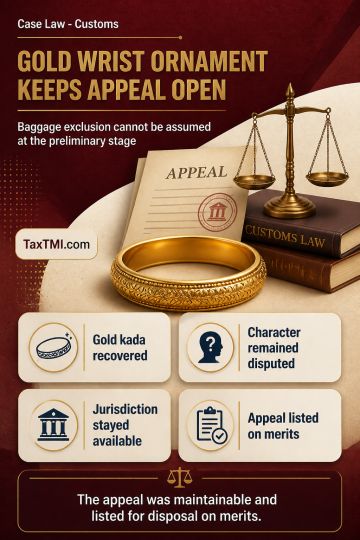
Appellate jurisdiction remains available where a wrist-worn gold ornament cannot conclusively be characterised as imported baggage at the preliminary ...
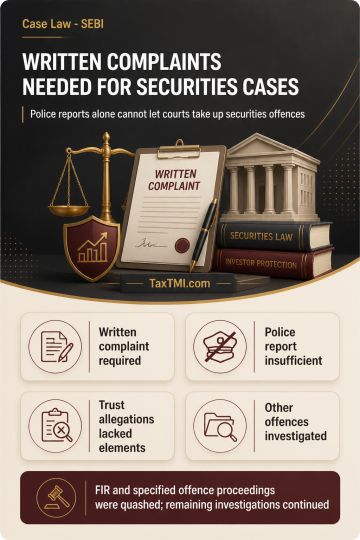
Written complaint requirement bars cognizance on police reports for securities offences, while unsupported breach of trust and cheating allegations fa...
Page of 4801
Press 'Enter' after typing page number.
341 to 360 of 96001 Results
❮
❯
❯❯
0 / 200
Expand Note
Add to Folder
No Folders have been created
+
Are you sure you want to delete "My most important" ?
The High Court allowed the petition and quashed the impugned order rejecting the petitioner's refund application for unutilized input tax credit. The court held that the Notification No. 14/2022 amending Rule 89(5) of the GST Rules is clarificatory and curative in nature, rectifying the anomaly in the refund formula. Relying on Supreme Court precedents, the court ruled that such a clarificatory amendment operates retrospectively. Therefore, the amended Rule 89(5) would apply to refund or rectification applications filed within the two-year period u/s 54(1) of the GST Act, irrespective of the Central Board of Indirect Taxes and Customs (CBIC) circular restricting its applicability prospectively. Denying retrospective benefit would discriminate against assessees who applied for refunds before the amendment's issuance. The court quashed the circular's clarification treating the amendment as prospective and allowed the petitioner's refund claim based on the rectified formula.
The High Court allowed the petition and quashed the impugned order rejecting the petitioner's refund application for unutilized input tax credit. The court held that the Notification No. 14/2022 amending Rule 89(5) of the GST Rules is clarificatory and curative in nature, rectifying the anomaly in the refund formula. Relying on Supreme Court precedents, the court ruled that such a clarificatory amendment operates retrospectively. Therefore, the amended Rule 89(5) would apply to refund or rectification applications filed within the two-year period u/s 54(1) of the GST Act, irrespective of the Central Board of Indirect Taxes and Customs (CBIC) circular restricting its applicability prospectively. Denying retrospective benefit would discriminate against assessees who applied for refunds before the amendment's issuance. The court quashed the circular's clarification treating the amendment as prospective and allowed the petitioner's refund claim based on the rectified formula.
Note: It is a system-generated summary and is for quick reference only.
 TaxTMI
 of 4801









 Join Channel


 TaxTMI