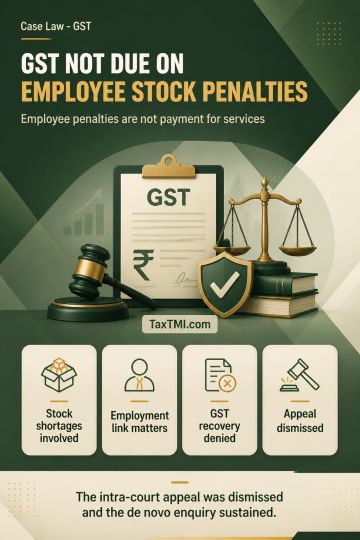
Employee stock-shortage penalties do not constitute consideration for services, preventing GST collection under Schedule II in employment relationship...
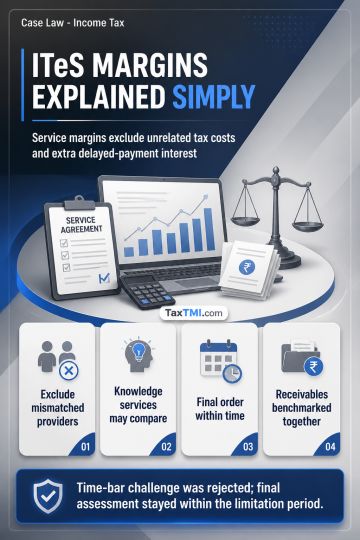
Transfer-pricing treatment of ITeS margins excludes pass-through tax recoveries and separate delayed-receivables interest after working-capital adjust...
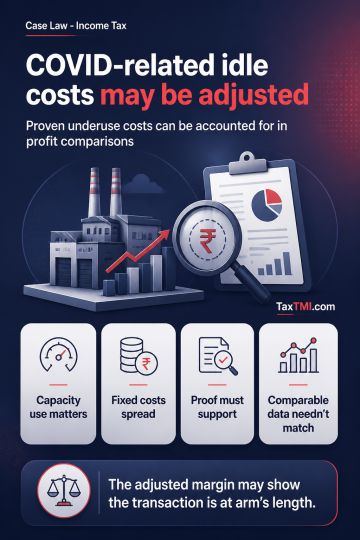
Capacity-utilisation adjustments under TNMM can neutralise substantiated COVID-related idle costs where underutilisation materially affects profitabil...
Page of 4830
Press 'Enter' after typing page number.
181 to 200 of 96587 Results
❮
❯
❯❯
0 / 200
Expand Note
Add to Folder
No Folders have been created
+
Are you sure you want to delete "My most important" ?
The High Court upheld the Appellate Tribunal's decision in favor of the assessee. It found that the Tribunal correctly considered the evidence provided by the assessee, such as PAN, Aadhaar cards, income tax exemption certificates, work orders, property ownership certificates, audited financial statements, and affidavits affirming loan transactions, to discharge the initial burden of proof regarding the sources of cash credits received from Nagaland-based entities. The Tribunal rightly concluded that the assessee was not the de facto owner of the Nagaland bank accounts or the recipient accounts. Regarding additions to taxable income without incriminating material from the search, the High Court noted that the Tribunal's decision was no longer valid due to the Supreme Court's ruling in Abhisar Buildwell Pvt. Ltd., which held that additions cannot be made without incriminating material found during the search u/s 132.
The High Court upheld the Appellate Tribunal's decision in favor of the assessee. It found that the Tribunal correctly considered the evidence provided by the assessee, such as PAN, Aadhaar cards, income tax exemption certificates, work orders, property ownership certificates, audited financial statements, and affidavits affirming loan transactions, to discharge the initial burden of proof regarding the sources of cash credits received from Nagaland-based entities. The Tribunal rightly concluded that the assessee was not the de facto owner of the Nagaland bank accounts or the recipient accounts. Regarding additions to taxable income without incriminating material from the search, the High Court noted that the Tribunal's decision was no longer valid due to the Supreme Court's ruling in Abhisar Buildwell Pvt. Ltd., which held that additions cannot be made without incriminating material found during the search u/s 132.
Note: It is a system-generated summary and is for quick reference only.
 TaxTMI
  TaxTMI
 of 4830



 Join Channel


