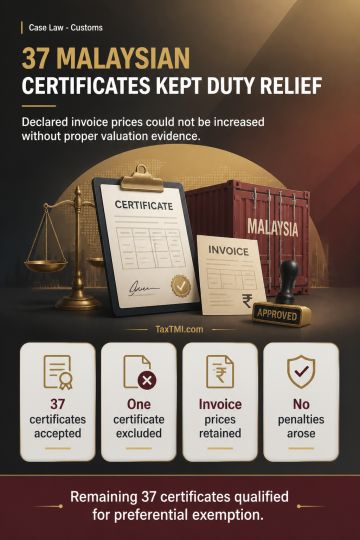
Country of Origin Certificates and declared transaction value supported preferential customs exemption where authenticity and invoice prices remained ...
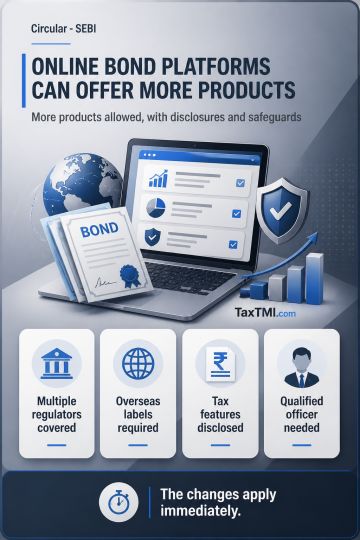
Online bond platforms may offer overseas-regulated products and tax-specific bonds subject to disclosures, compliance safeguards and revised complianc...
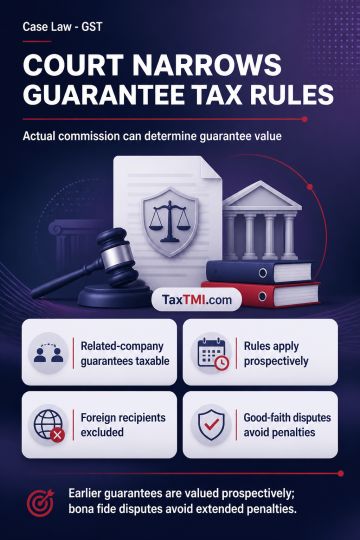
Corporate guarantee valuation permits actual ascertainable commission while barring retroactive application and extended-period penalties for bona fid...
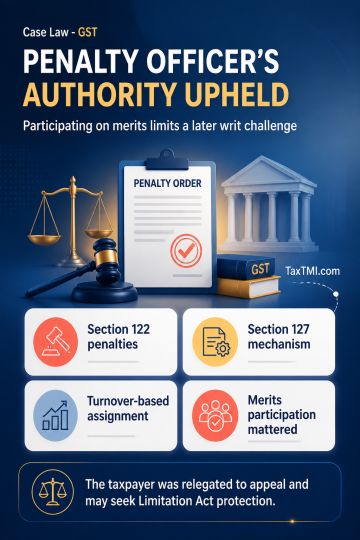
Proper-officer jurisdiction under UPGST penalty provisions upheld; participation on merits prevents bypassing the statutory appellate remedy through w...
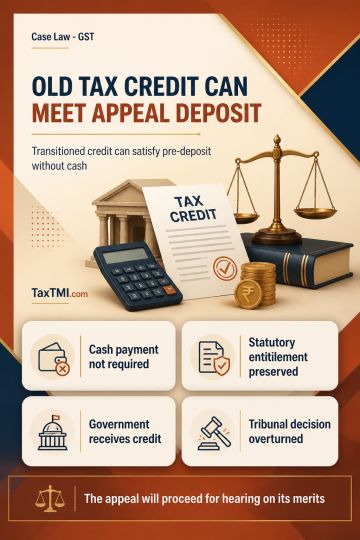
Transitioned CENVAT credit may validly satisfy mandatory pre-deposit requirements for legacy service tax appeals through Electronic Credit Ledger debi...
Page of 4803
Press 'Enter' after typing page number.
161 to 180 of 96047 Results
❮
❯
❯❯
0 / 200
Expand Note
Add to Folder
No Folders have been created
+
Are you sure you want to delete "My most important" ?
The High Court held that the writ petition challenging the respondent Bank's actions in not releasing amounts deposited in an Escrow Account for payment of statutory liabilities like GST from 2017 onwards is maintainable, despite other disputes being adjudicated before the Debts Recovery Tribunal. The Bank's adjustments to the receivables in the Escrow Account for loan repayment, resulting in non-compliance with statutory requirements like filing GSTR-3B and non-payment of GST, constituted a breach of the Escrow Agreement. The petitioner Company did not have control or the right to operate the Escrow Account, which was to be operated by the respondent Bank as per the Agreement. Consequently, the writ petition was allowed.
The High Court held that the writ petition challenging the respondent Bank's actions in not releasing amounts deposited in an Escrow Account for payment of statutory liabilities like GST from 2017 onwards is maintainable, despite other disputes being adjudicated before the Debts Recovery Tribunal. The Bank's adjustments to the receivables in the Escrow Account for loan repayment, resulting in non-compliance with statutory requirements like filing GSTR-3B and non-payment of GST, constituted a breach of the Escrow Agreement. The petitioner Company did not have control or the right to operate the Escrow Account, which was to be operated by the respondent Bank as per the Agreement. Consequently, the writ petition was allowed.
Note: It is a system-generated summary and is for quick reference only.
 TaxTMI
 of 4803





 Join Channel


 TaxTMI