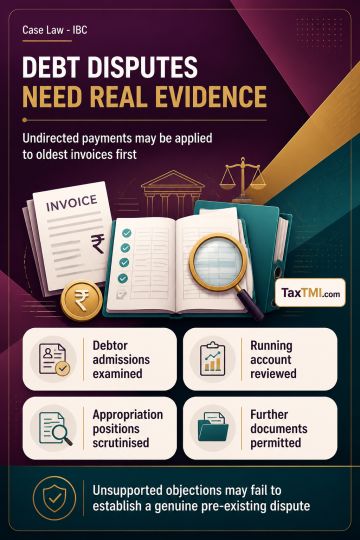
Pre-existing operational debt disputes require genuine evidence, while undirected running-account payments may be appropriated on a first-in-first-out...
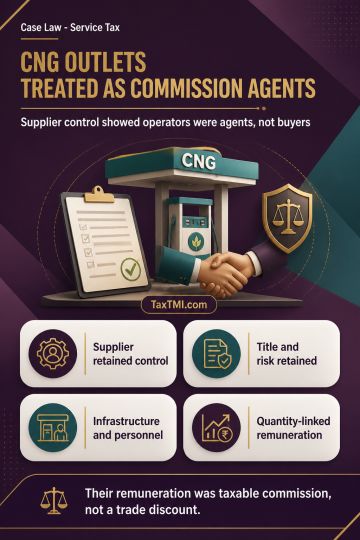
Agency in CNG distribution makes outlet operators commission agents, rendering taxable Business Auxiliary Service rather than purchasing goods for res...
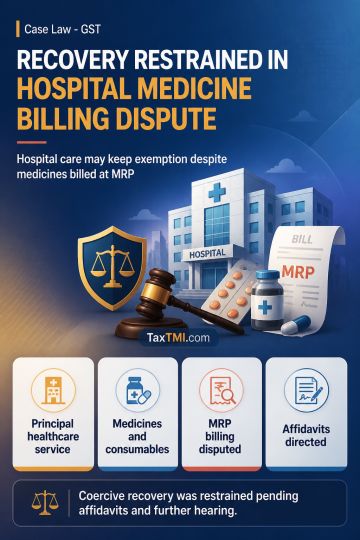
Composite inpatient healthcare supply may retain exemption despite MRP medicine billing, while separate taxable sale characterisation remains disputed...
The High Court held that the writ petition challenging the respondent Bank's actions in not releasing amounts deposited in an Escrow Account for payment of statutory liabilities like GST from 2017 onwards is maintainable, despite other disputes being adjudicated before the Debts Recovery Tribunal. The Bank's adjustments to the receivables in the Escrow Account for loan repayment, resulting in non-compliance with statutory requirements like filing GSTR-3B and non-payment of GST, constituted a breach of the Escrow Agreement. The petitioner Company did not have control or the right to operate the Escrow Account, which was to be operated by the respondent Bank as per the Agreement. Consequently, the writ petition was allowed.
The High Court held that the writ petition challenging the respondent Bank's actions in not releasing amounts deposited in an Escrow Account for payment of statutory liabilities like GST from 2017 onwards is maintainable, despite other disputes being adjudicated before the Debts Recovery Tribunal. The Bank's adjustments to the receivables in the Escrow Account for loan repayment, resulting in non-compliance with statutory requirements like filing GSTR-3B and non-payment of GST, constituted a breach of the Escrow Agreement. The petitioner Company did not have control or the right to operate the Escrow Account, which was to be operated by the respondent Bank as per the Agreement. Consequently, the writ petition was allowed.
Note: It is a system-generated summary and is for quick reference only.
 TaxTMI
 of 4807





 Join Channel


 TaxTMI
