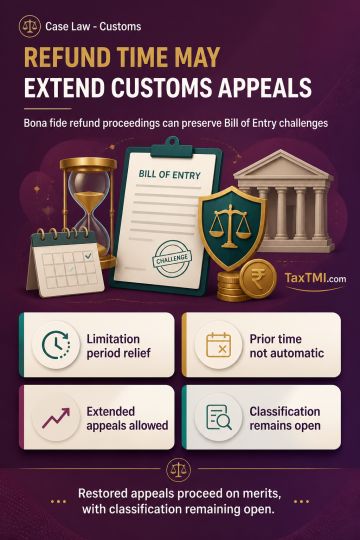
Limitation in customs appeals permits exclusion for bona fide refund proceedings, enabling restoration of Bill of Entry assessment challenges on merit...
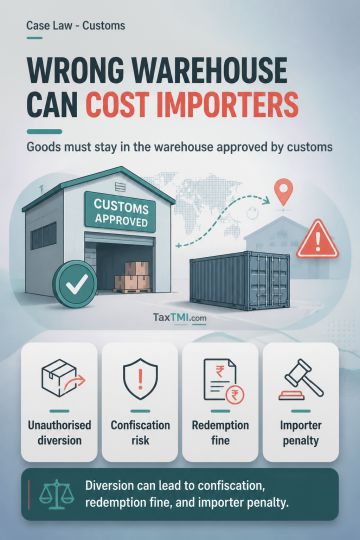
Warehousing permission requires deposit at the designated bonded warehouse; unauthorised diversion triggers confiscation, redemption fine and importer...
The High Court held that the writ petition challenging the respondent Bank's actions in not releasing amounts deposited in an Escrow Account for payment of statutory liabilities like GST from 2017 onwards is maintainable, despite other disputes being adjudicated before the Debts Recovery Tribunal. The Bank's adjustments to the receivables in the Escrow Account for loan repayment, resulting in non-compliance with statutory requirements like filing GSTR-3B and non-payment of GST, constituted a breach of the Escrow Agreement. The petitioner Company did not have control or the right to operate the Escrow Account, which was to be operated by the respondent Bank as per the Agreement. Consequently, the writ petition was allowed.
The High Court held that the writ petition challenging the respondent Bank's actions in not releasing amounts deposited in an Escrow Account for payment of statutory liabilities like GST from 2017 onwards is maintainable, despite other disputes being adjudicated before the Debts Recovery Tribunal. The Bank's adjustments to the receivables in the Escrow Account for loan repayment, resulting in non-compliance with statutory requirements like filing GSTR-3B and non-payment of GST, constituted a breach of the Escrow Agreement. The petitioner Company did not have control or the right to operate the Escrow Account, which was to be operated by the respondent Bank as per the Agreement. Consequently, the writ petition was allowed.
Note: It is a system-generated summary and is for quick reference only.
 TaxTMI
 of 4803





 Join Channel


 TaxTMI

