Development agreements require legal possession or effective enjoyment for capital gains transfer; permissive possession and deferred consideration de...
Prolonged sterilisation of development rights supports capital-gains treatment, while business-income disallowances cannot govern capital-gains comput...
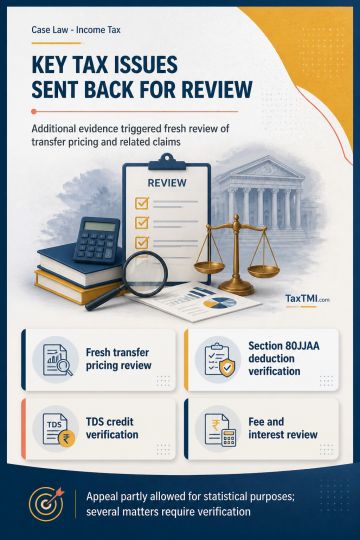
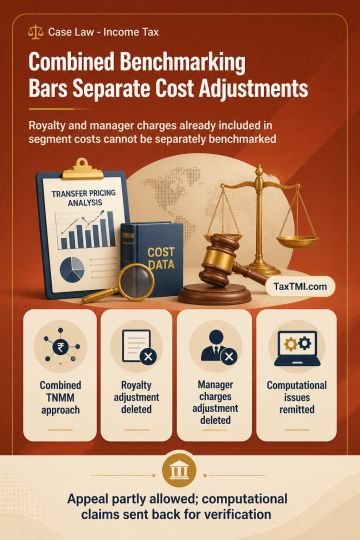
Additional evidence in transfer pricing dispute leads to fresh examination, while tax deductions, TDS credit, fee and refund interest require verifica...
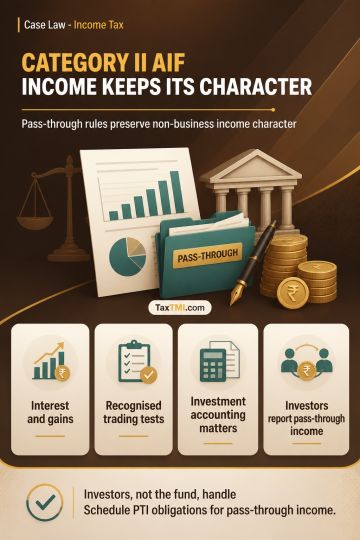
Category II AIF pass-through taxation preserves non-business income character; investment receipts cannot be reclassified without applying recognised ...
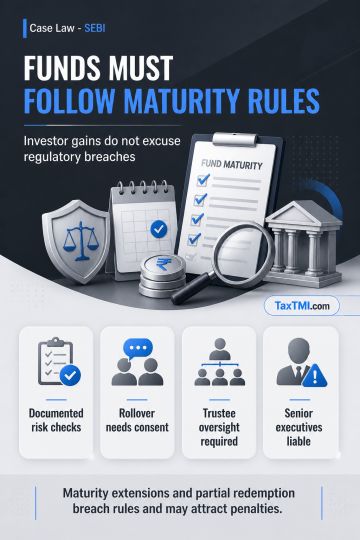
Mutual fund maturity rules require proper rollover, redemption, disclosure, and due diligence; investor gains cannot excuse regulatory breaches or pen...
Page of 4798
Press 'Enter' after typing page number.
1161 to 1180 of 95957 Results
❮
❯
❯❯
0 / 200
Expand Note
Add to Folder
No Folders have been created
+
Are you sure you want to delete "My most important" ?
The High Court cancelled the bail granted to the respondent Gautam Garg, finding that the lower court had misconstrued the facts and legal position u/s 132 of the CGST Act. The Court held that the absence of material indicating the accused as the manager of the firms is not essential for prosecution u/s 132, which covers those who "cause to commit" offenses related to availing input tax credit without issuing invoices or supplying goods. The legislature amended Section 132 to catch hold of offenders enabling companies to avail input credit illegally. The Court found the respondent's arguments regarding accountability of only individuals engaged in management unsustainable and observed that while considering bail, courts should not delve into the legality of arrest unless there is a gross violation.
The High Court cancelled the bail granted to the respondent Gautam Garg, finding that the lower court had misconstrued the facts and legal position u/s 132 of the CGST Act. The Court held that the absence of material indicating the accused as the manager of the firms is not essential for prosecution u/s 132, which covers those who "cause to commit" offenses related to availing input tax credit without issuing invoices or supplying goods. The legislature amended Section 132 to catch hold of offenders enabling companies to avail input credit illegally. The Court found the respondent's arguments regarding accountability of only individuals engaged in management unsustainable and observed that while considering bail, courts should not delve into the legality of arrest unless there is a gross violation.
Note: It is a system-generated summary and is for quick reference only.
 TaxTMI
 of 4798









 Join Channel


 TaxTMI