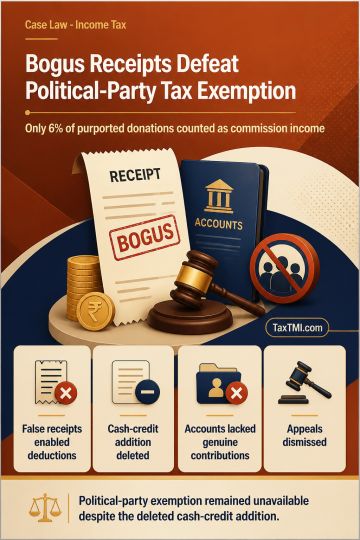
Bogus donation receipts justified commission income assessment and defeated political-party tax exemption for inaccurate accounts and reporting failur...
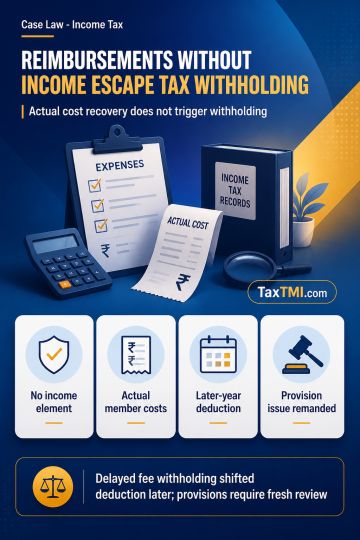
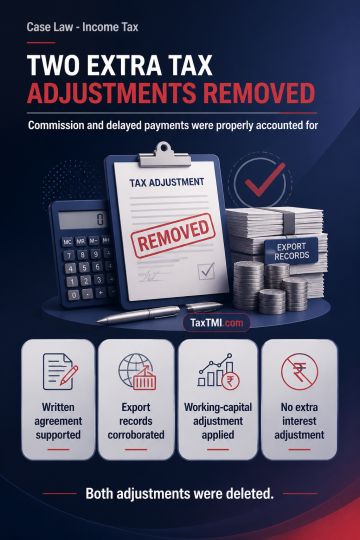
Pure reimbursement without income element escapes tax withholding, while delayed withholding and unsupported provisions face deferred or renewed scrut...
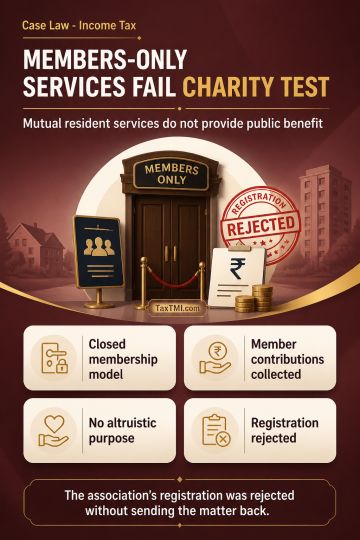
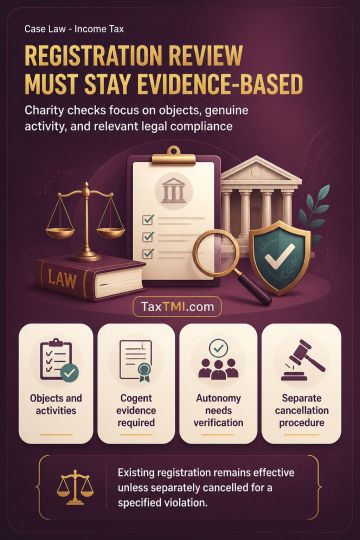
Public benefit requirement defeats charitable registration where residents' association services are reciprocal, member-only facilities governed by mu...
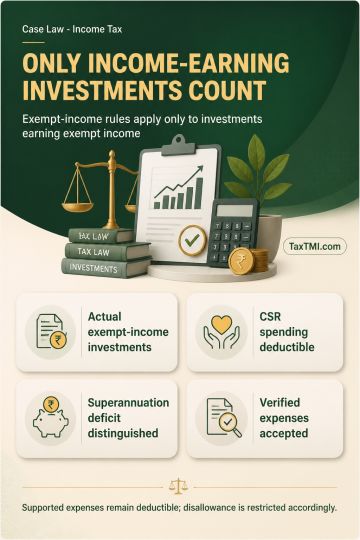
Exempt-income expenditure disallowance is confined to investments that actually generated exempt income, while supported business expenses remain dedu...
Objective characteristics and principal use govern mining-tyre classification, while fresh advance ruling applications may rely on additional technica...
Page of 4788
Press 'Enter' after typing page number.
461 to 480 of 95752 Results
❮
❯
❯❯
0 / 200
Expand Note
Add to Folder
No Folders have been created
+
Are you sure you want to delete "My most important" ?
The High Court cancelled the bail granted to the respondent Gautam Garg, finding that the lower court had misconstrued the facts and legal position u/s 132 of the CGST Act. The Court held that the absence of material indicating the accused as the manager of the firms is not essential for prosecution u/s 132, which covers those who "cause to commit" offenses related to availing input tax credit without issuing invoices or supplying goods. The legislature amended Section 132 to catch hold of offenders enabling companies to avail input credit illegally. The Court found the respondent's arguments regarding accountability of only individuals engaged in management unsustainable and observed that while considering bail, courts should not delve into the legality of arrest unless there is a gross violation.
The High Court cancelled the bail granted to the respondent Gautam Garg, finding that the lower court had misconstrued the facts and legal position u/s 132 of the CGST Act. The Court held that the absence of material indicating the accused as the manager of the firms is not essential for prosecution u/s 132, which covers those who "cause to commit" offenses related to availing input tax credit without issuing invoices or supplying goods. The legislature amended Section 132 to catch hold of offenders enabling companies to avail input credit illegally. The Court found the respondent's arguments regarding accountability of only individuals engaged in management unsustainable and observed that while considering bail, courts should not delve into the legality of arrest unless there is a gross violation.
Note: It is a system-generated summary and is for quick reference only.
 TaxTMI
 of 4788



 Join Channel


 TaxTMI