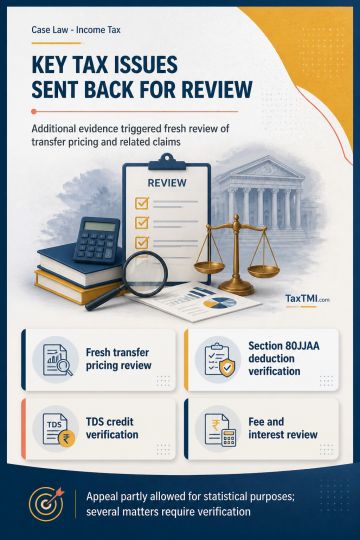
Additional evidence in transfer pricing dispute leads to fresh examination, while tax deductions, TDS credit, fee and refund interest require verifica...
Category II AIF pass-through taxation preserves non-business income character; investment receipts cannot be reclassified without applying recognised ...
Mutual fund maturity rules require proper rollover, redemption, disclosure, and due diligence; investor gains cannot excuse regulatory breaches or pen...
Threshold exemption excludes exempt services, while stamp-paper purchases avoid reverse charge; consequential service tax penalties were also set asid...
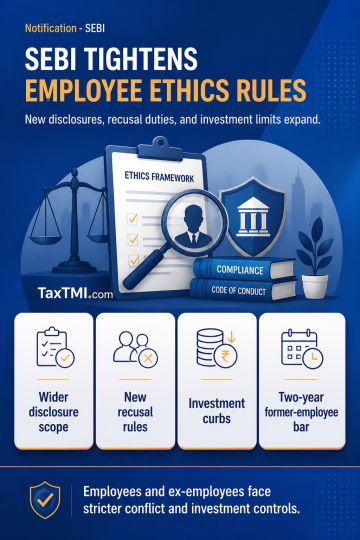
Employee conflict disclosures and investment restrictions expand with new recusal duties, post-employment limits, and compliance reporting requirement...
The ITAT held that the order passed u/s 263 by the PCIT was in gross violation of the principles of natural justice. The Tribunal observed that the order disregarded the assessee's legal and factual submissions without any discussion or rebuttal, rendering the proceedings a mere formality. Furthermore, the Tribunal noted that the assessee had opted for the Vivad se Vishwas scheme, paid the due taxes, and provided judicial precedents supporting their claim for deduction u/s 10AA. The Assessing Officer, after considering the submissions, took a legally plausible view and did not disturb the deduction claim. The Tribunal also highlighted that several precedents have held that once an assessee opts for the Vivad se Vishwas scheme and pays taxes, the tax proceedings for that year cannot be re-agitated through Section 263 proceedings. Considering it was the ninth year of the deduction claim and the principle of consistency, the Tribunal ruled in favor of the assessee, setting aside the order passed u/s 263.
The ITAT held that the order passed u/s 263 by the PCIT was in gross violation of the principles of natural justice. The Tribunal observed that the order disregarded the assessee's legal and factual submissions without any discussion or rebuttal, rendering the proceedings a mere formality. Furthermore, the Tribunal noted that the assessee had opted for the Vivad se Vishwas scheme, paid the due taxes, and provided judicial precedents supporting their claim for deduction u/s 10AA. The Assessing Officer, after considering the submissions, took a legally plausible view and did not disturb the deduction claim. The Tribunal also highlighted that several precedents have held that once an assessee opts for the Vivad se Vishwas scheme and pays taxes, the tax proceedings for that year cannot be re-agitated through Section 263 proceedings. Considering it was the ninth year of the deduction claim and the principle of consistency, the Tribunal ruled in favor of the assessee, setting aside the order passed u/s 263.
Note: It is a system-generated summary and is for quick reference only.
 TaxTMI
 of 4803












 Join Channel


 TaxTMI
