Transfer pricing and tax deductions upheld on established principles, while employee contributions and warranty provisions returned for fresh examinat...
Captive transfer pricing relies on industrial consumer tariffs, while genuine quotations can benchmark effluent treatment transfers under the Other Me...
Specific tariff classification for ophthalmic instruments and extended limitation principles determine the treatment of duty demands, confiscation, an...
Integrated golf function determines classification, placing launch monitors and simulators under other golf equipment rather than measuring instrument...
Public servant status under anti-corruption law extends to recognised stock exchange leadership; constitutional and sanction challenges do not succeed...
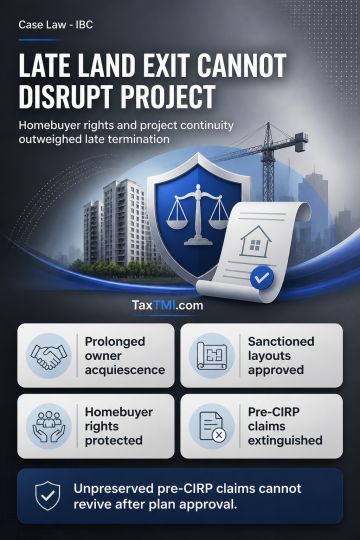
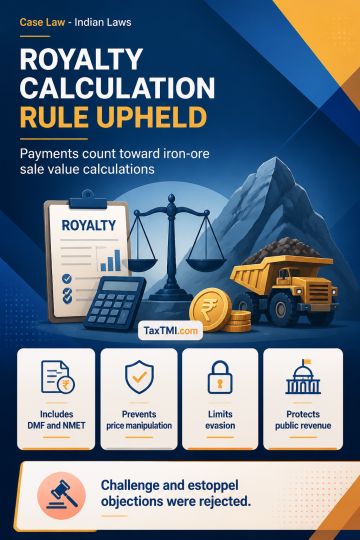
Acquiescence, homebuyer protection and clean-slate resolution principles prevent landowners from disrupting an integrated project through late termina...
The ITAT held that the order passed u/s 263 by the PCIT was in gross violation of the principles of natural justice. The Tribunal observed that the order disregarded the assessee's legal and factual submissions without any discussion or rebuttal, rendering the proceedings a mere formality. Furthermore, the Tribunal noted that the assessee had opted for the Vivad se Vishwas scheme, paid the due taxes, and provided judicial precedents supporting their claim for deduction u/s 10AA. The Assessing Officer, after considering the submissions, took a legally plausible view and did not disturb the deduction claim. The Tribunal also highlighted that several precedents have held that once an assessee opts for the Vivad se Vishwas scheme and pays taxes, the tax proceedings for that year cannot be re-agitated through Section 263 proceedings. Considering it was the ninth year of the deduction claim and the principle of consistency, the Tribunal ruled in favor of the assessee, setting aside the order passed u/s 263.
The ITAT held that the order passed u/s 263 by the PCIT was in gross violation of the principles of natural justice. The Tribunal observed that the order disregarded the assessee's legal and factual submissions without any discussion or rebuttal, rendering the proceedings a mere formality. Furthermore, the Tribunal noted that the assessee had opted for the Vivad se Vishwas scheme, paid the due taxes, and provided judicial precedents supporting their claim for deduction u/s 10AA. The Assessing Officer, after considering the submissions, took a legally plausible view and did not disturb the deduction claim. The Tribunal also highlighted that several precedents have held that once an assessee opts for the Vivad se Vishwas scheme and pays taxes, the tax proceedings for that year cannot be re-agitated through Section 263 proceedings. Considering it was the ninth year of the deduction claim and the principle of consistency, the Tribunal ruled in favor of the assessee, setting aside the order passed u/s 263.
Note: It is a system-generated summary and is for quick reference only.
 TaxTMI
 of 4803













 Join Channel


 TaxTMI