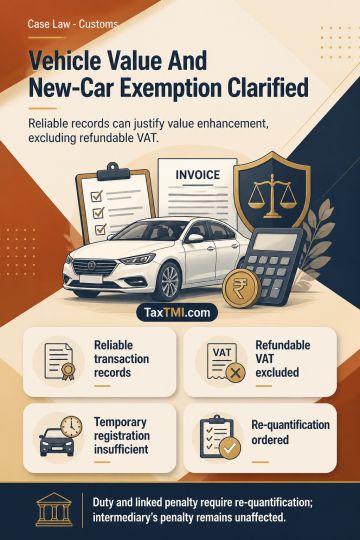
Transaction value rejection requires reliable corroboration; refundable VAT is excluded and temporary registration does not defeat new-vehicle exempti...
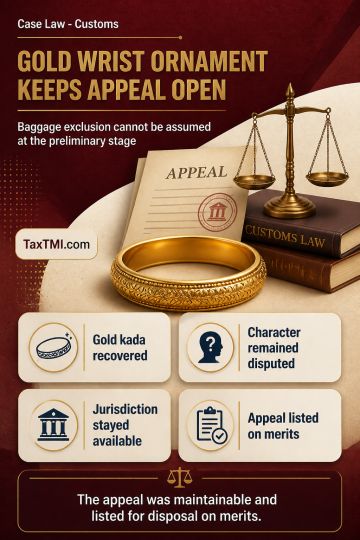
Appellate jurisdiction remains available where a wrist-worn gold ornament cannot conclusively be characterised as imported baggage at the preliminary ...
Written complaint requirement bars cognizance on police reports for securities offences, while unsupported breach of trust and cheating allegations fa...
Risk-based postal import clearance standardises electronic assessment, document requests, duty realisation and delivery controls at Foreign Post Offic...
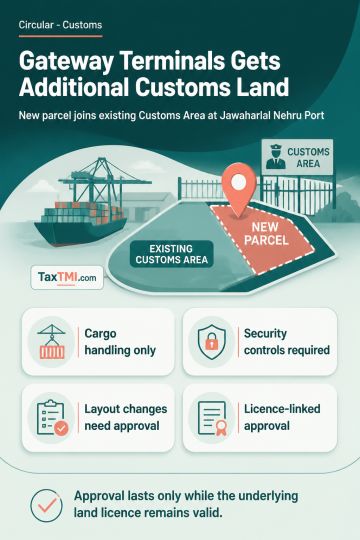
Customs Cargo Service Provider appointment extends custodianship to additional terminal land, subject to cargo-control, security and licence condition...
The ITAT upheld the CIT(A)'s order regarding three additions made by the Assessing Officer. Firstly, the receipt treated as consultancy income was rightly held to be a booking advance by the CIT(A) as no evidence of consultancy services was found and no TDS was deducted. Secondly, the addition for overstatement of purchases was correctly deleted by the CIT(A) after considering the assessee's explanation and finding no disparity between book data and sundry creditor details. Thirdly, the CIT(A)'s deletion of addition for unexplained expenditure was upheld as the chart for loan repayments through banking channels was based on bank statements filed during assessment, and the Revenue failed to controvert these factual findings.
The ITAT upheld the CIT(A)'s order regarding three additions made by the Assessing Officer. Firstly, the receipt treated as consultancy income was rightly held to be a booking advance by the CIT(A) as no evidence of consultancy services was found and no TDS was deducted. Secondly, the addition for overstatement of purchases was correctly deleted by the CIT(A) after considering the assessee's explanation and finding no disparity between book data and sundry creditor details. Thirdly, the CIT(A)'s deletion of addition for unexplained expenditure was upheld as the chart for loan repayments through banking channels was based on bank statements filed during assessment, and the Revenue failed to controvert these factual findings.
Note: It is a system-generated summary and is for quick reference only.
 TaxTMI
 of 4784





 Join Channel


 TaxTMI