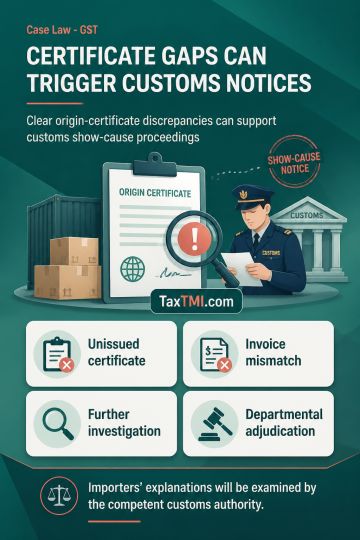
Jurisdictional facts in certificate-of-origin discrepancies can support customs show-cause proceedings, leaving factual explanations for departmental ...
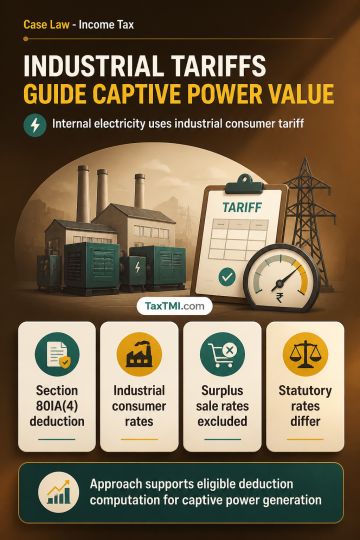
Market value for captive electricity consumption follows industrial consumer tariffs, supporting profit computation for the power generation deduction...
The High Court directed the respondent authorities to allow the petitioner to amend the shipping bills u/s 149 of the Customs Act, 1962, and process the claim for the Merchandise Exports From India Scheme (MEIS) benefit. The court held that when the substantive conditions are satisfied, the benefit cannot be denied due to a technical error or lacunae in the electronic system. The petitioner's non-declaration of intent to avail the MEIS benefit on the shipping bills was a curable defect, and the authorities were unjustified in denying the MEIS benefit. The petition was disposed of in favor of the petitioner.
The High Court directed the respondent authorities to allow the petitioner to amend the shipping bills u/s 149 of the Customs Act, 1962, and process the claim for the Merchandise Exports From India Scheme (MEIS) benefit. The court held that when the substantive conditions are satisfied, the benefit cannot be denied due to a technical error or lacunae in the electronic system. The petitioner's non-declaration of intent to avail the MEIS benefit on the shipping bills was a curable defect, and the authorities were unjustified in denying the MEIS benefit. The petition was disposed of in favor of the petitioner.
Note: It is a system-generated summary and is for quick reference only.
 TaxTMI
 of 4801





 Join Channel


 TaxTMI
