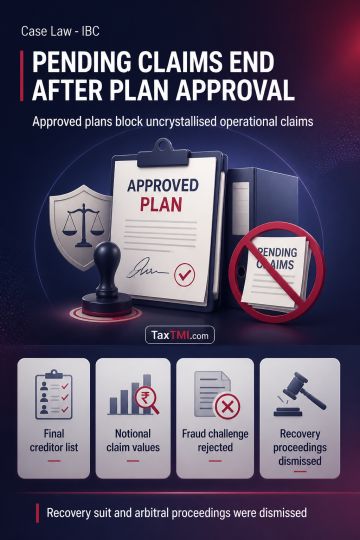
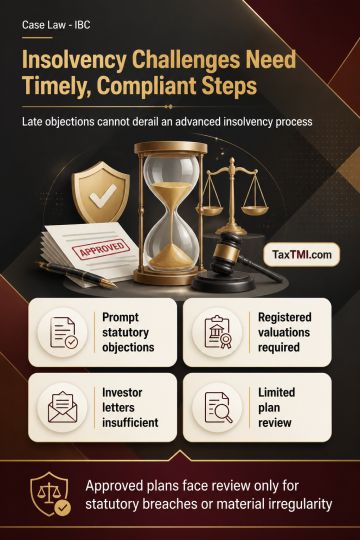
Clean slate principle extinguishes uncrystallised operational claims and bars continuation of pending recovery and arbitral proceedings after plan app...
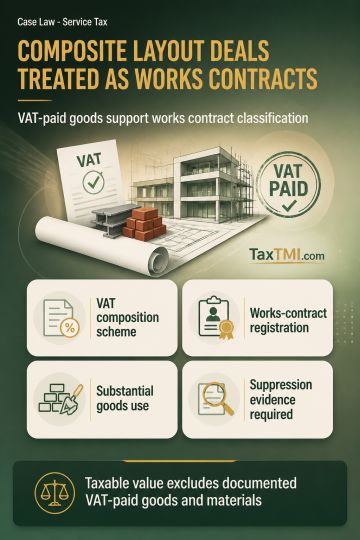
Works contract classification governs composite layout-development contracts where VAT-paid goods are transferred alongside construction and infrastru...
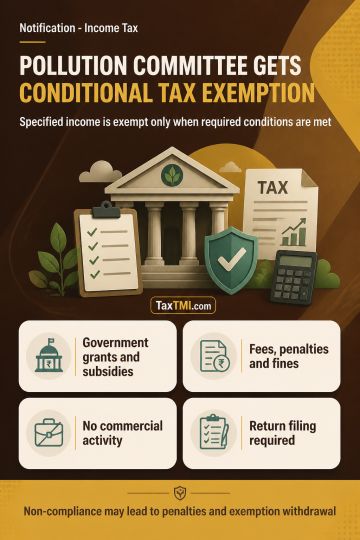
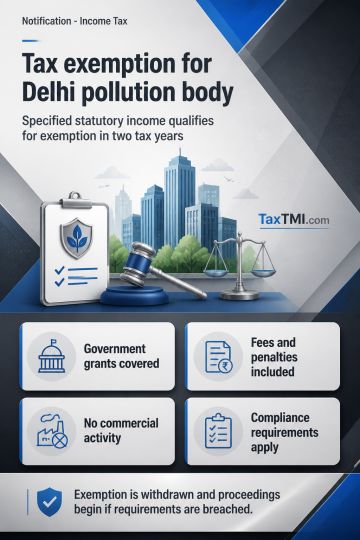
Specified income tax exemption for pollution control body remains conditional on non-commercial activity, unchanged income character, and return filin...
The High Court directed the respondent authorities to allow the petitioner to amend the shipping bills u/s 149 of the Customs Act, 1962, and process the claim for the Merchandise Exports From India Scheme (MEIS) benefit. The court held that when the substantive conditions are satisfied, the benefit cannot be denied due to a technical error or lacunae in the electronic system. The petitioner's non-declaration of intent to avail the MEIS benefit on the shipping bills was a curable defect, and the authorities were unjustified in denying the MEIS benefit. The petition was disposed of in favor of the petitioner.
The High Court directed the respondent authorities to allow the petitioner to amend the shipping bills u/s 149 of the Customs Act, 1962, and process the claim for the Merchandise Exports From India Scheme (MEIS) benefit. The court held that when the substantive conditions are satisfied, the benefit cannot be denied due to a technical error or lacunae in the electronic system. The petitioner's non-declaration of intent to avail the MEIS benefit on the shipping bills was a curable defect, and the authorities were unjustified in denying the MEIS benefit. The petition was disposed of in favor of the petitioner.
Note: It is a system-generated summary and is for quick reference only.
 TaxTMI
 of 4801






 Join Channel


 TaxTMI