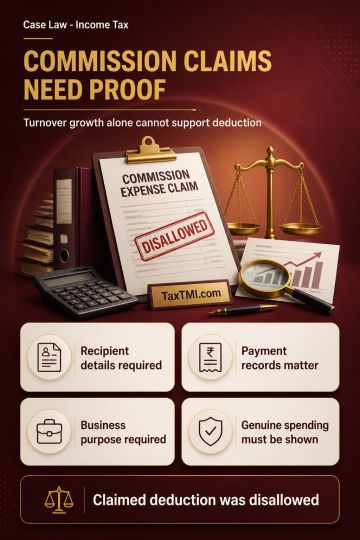
Business expenditure deduction requires proof of genuine commission payments and commercial allowability; turnover growth alone cannot validate the cl...
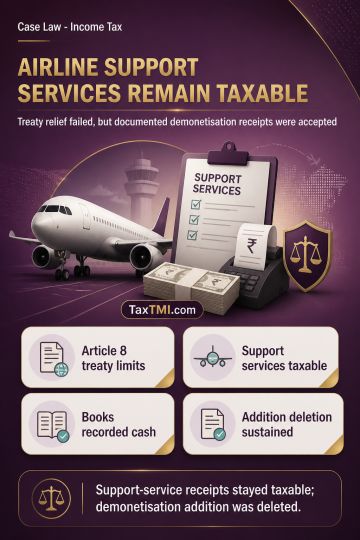
Article 8 treaty coverage excluded third-party airline support services, while documented demonetisation cash receipts remained accepted business inco...
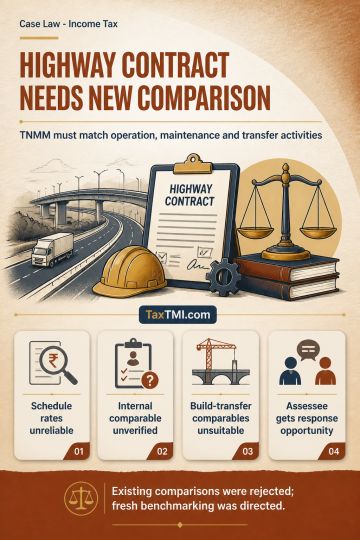
Functional comparability under TNMM requires highway contract benchmarks to reflect operation, maintenance and transfer activities, requiring fresh be...
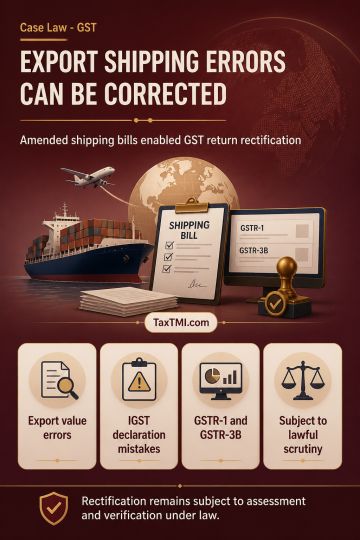
The High Court directed the respondent authorities to allow the petitioner to amend the shipping bills u/s 149 of the Customs Act, 1962, and process the claim for the Merchandise Exports From India Scheme (MEIS) benefit. The court held that when the substantive conditions are satisfied, the benefit cannot be denied due to a technical error or lacunae in the electronic system. The petitioner's non-declaration of intent to avail the MEIS benefit on the shipping bills was a curable defect, and the authorities were unjustified in denying the MEIS benefit. The petition was disposed of in favor of the petitioner.
The High Court directed the respondent authorities to allow the petitioner to amend the shipping bills u/s 149 of the Customs Act, 1962, and process the claim for the Merchandise Exports From India Scheme (MEIS) benefit. The court held that when the substantive conditions are satisfied, the benefit cannot be denied due to a technical error or lacunae in the electronic system. The petitioner's non-declaration of intent to avail the MEIS benefit on the shipping bills was a curable defect, and the authorities were unjustified in denying the MEIS benefit. The petition was disposed of in favor of the petitioner.
Note: It is a system-generated summary and is for quick reference only.
 TaxTMI
 of 4792



 Join Channel


 TaxTMI
