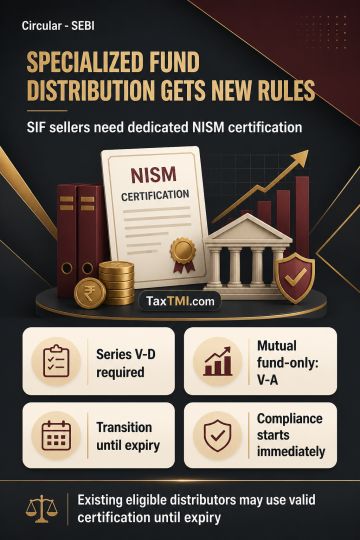
Specialized Investment Fund distribution now requires dedicated certification, while transitional recognition preserves existing qualified distributor...
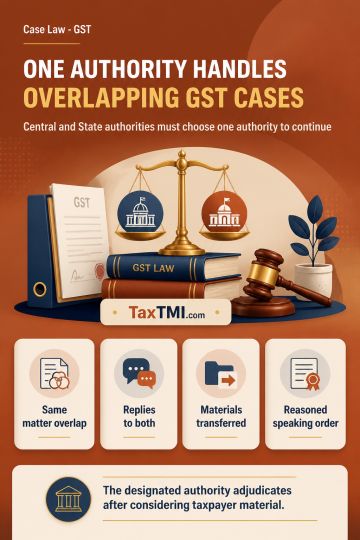
Overlapping GST proceedings require Central and State authorities to designate one competent authority for coordinated adjudication of the same matter...
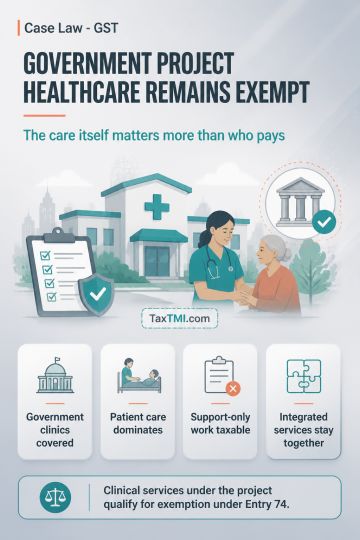
Composite healthcare supplies retain exemption when patient care is the contract's essential character, despite payment through an implementing agency...
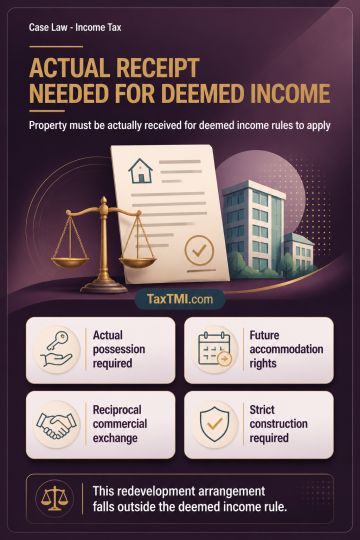
Receipt of immovable property requires actual possession or enjoyment; redevelopment allotments exchanged for tenancy rights fall outside deemed incom...
The Commissioner's rejection of the appellant's requests for conversion of DFIA Shipping Bills to Drawback Shipping Bills, relying on Para 3(a) of the CBIC Circular No. 36/2010-Customs, was held to be incorrect. The Gujarat High Court had previously ruled that Para 3(a) of the said Circular was ultra vires Articles 14 and 19(1)(g) of the Constitution of India and ultra vires Section 149 of the Customs Act, 1962. Since the Commissioner's rejection was solely based on the struck-down Para 3(a), the impugned order was held to be bad in law. Furthermore, under Para 4.28(e) of the Handbook of Procedures 2009-14, the appellant could apply for conversion after the DFIA licenses were cancelled, which they promptly did. No time limit was prescribed for seeking conversion. Consequently, the appellant was entitled to conversion of the Shipping Bills into drawback shipping bills. The CESTAT allowed the appeal.
The Commissioner's rejection of the appellant's requests for conversion of DFIA Shipping Bills to Drawback Shipping Bills, relying on Para 3(a) of the CBIC Circular No. 36/2010-Customs, was held to be incorrect. The Gujarat High Court had previously ruled that Para 3(a) of the said Circular was ultra vires Articles 14 and 19(1)(g) of the Constitution of India and ultra vires Section 149 of the Customs Act, 1962. Since the Commissioner's rejection was solely based on the struck-down Para 3(a), the impugned order was held to be bad in law. Furthermore, under Para 4.28(e) of the Handbook of Procedures 2009-14, the appellant could apply for conversion after the DFIA licenses were cancelled, which they promptly did. No time limit was prescribed for seeking conversion. Consequently, the appellant was entitled to conversion of the Shipping Bills into drawback shipping bills. The CESTAT allowed the appeal.
Note: It is a system-generated summary and is for quick reference only.
 TaxTMI
 of 4794



 Join Channel


 TaxTMI
